Elliptical vs Treadmill
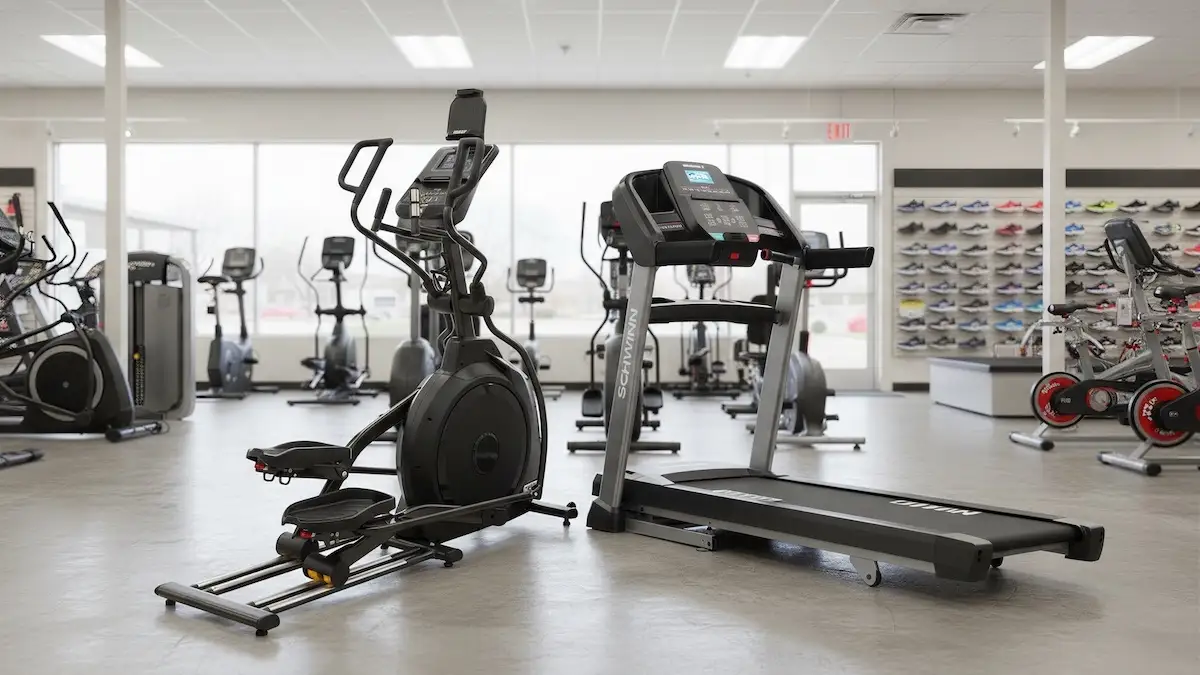
Standing in the fitness equipment aisle or scrolling through endless online options, millions of Americans face the same dilemma every year: should I invest in an elliptical machine or a treadmill?
Between elliptical and treadmill, there's no one-size-fits-all answer. The ideal choice will depend on your fitness goals, physical limitations, living situation, and budget. We'll break down everything from calorie burn and joint impact to space requirements and long-term durability, ensuring you invest in the right equipment for your specific needs. By the end of this analysis, you'll know exactly which machine deserves a place in your home gym.
Elliptical vs Treadmill: Which to Choose Based on Your Priorities
Before diving into the details, here's a quick overview to help you identify which machine aligns best with your specific needs and constraints.
| Criteria | Elliptical | Treadmill | Winner |
|---|---|---|---|
| Weight Loss | ⭐⭐⭐⭐ | ⭐⭐⭐⭐⭐ | Treadmill |
| Joint Protection | ⭐⭐⭐⭐⭐ | ⭐⭐ | Elliptical |
| Muscles Engaged | Full-body | Lower body | Elliptical |
| Calories/Hour (150 lbs) | 450–600 | 500–700 | Treadmill |
| Noise Level | Quiet | Moderate–Loud | Elliptical |
| Space Required | 6–8 ft × 2–3 ft | 6–7 ft + clearance | Elliptical |
| Entry-Level Price | $300–500 | $400–600 | Elliptical |
| Beginner Friendly | ✓ Ideal | ⚠ Learning curve | Elliptical |
| Running Training | ✗ Not suitable | ✓ Essential | Treadmill |
| Maintenance Cost | Low | Moderate–High | Elliptical |
Elliptical Machines: The Complete Picture
How Elliptical Machines Work
Elliptical machines simulate a natural walking or running motion through an elliptical path that reduces impact on your joints. The key innovation lies in the biomechanics: your feet never leave the pedals, eliminating the jarring impact that occurs with each step during running.
Modern ellipticals come in two primary configurations. Front-drive ellipticals place the flywheel at the front, creating a flatter, more running-like stride pattern that closely mimics cross-country skiing motion. Rear-drive models position the flywheel behind you, producing a more upright posture and circular motion that resembles stair climbing or stepping movements.
The resistance mechanisms vary from magnetic systems that provide whisper-quiet operation to electromagnetic resistance that offers precise control over workout intensity. Upper body handles move in coordination with your legs, theoretically providing a full-body workout that treadmills can't match.
Key Advantages
First, ellipticals offer exceptional joint protection and are widely recognized as the gold standard for low impact cardio training. Research consistently shows that elliptical training produces significantly lower impact forces compared to running, making it an ideal choice for people with knee problems, hip issues, or those recovering from lower-body injuries. Unlike running or even brisk walking, the smooth gliding motion keeps your feet in constant contact with the pedals, virtually eliminating the repetitive shock that travels through your ankles, knees, and hips. For Americans dealing with the long-term effects of sedentary lifestyles, this low-impact benefit cannot be overstated.
Second, full-body muscle engagement sets ellipticals apart from most other cardio equipment. While your legs power the primary movement, the moving handles engage your arms, shoulders, and core muscles. This comprehensive muscle activation can theoretically burn more calories per minute than lower-body-only exercises, though the practical difference varies significantly based on how actively you use the upper body components.
Finally, the learning curve for elliptical machines is notably gentle. Unlike treadmills where pace and coordination matter significantly, ellipticals allow users to find their rhythm quickly. There's no risk of falling off, and the motion feels natural to most people within the first few sessions. This accessibility makes ellipticals particularly appealing for beginners, older adults, or those carrying extra weight who may feel intimidated by other fitness equipment, as the stable platform and handholds provide additional support and confidence during exercise.
Notable Limitations
Despite marketing claims, the elliptical motion isn't entirely natural. The fixed foot position and prescribed movement pattern don't perfectly replicate walking or running biomechanics. This limitation means that elliptical training doesn't provide the same neuromuscular adaptations as ground-based activities, potentially limiting its effectiveness for people training for outdoor running events.
Workout monotony represents a significant challenge for long-term adherence. Many people find the repetitive motion becomes boring quickly, leading them to abandon the machine after just a few sessions. The consistent, unchanging movement pattern can feel tedious more rapidly than the varied pace and terrain options available on treadmills. While many modern ellipticals include pre-programmed workouts and resistance changes, the fundamental movement pattern remains the same.
The upper body engagement, while marketed as a major benefit, often provides less resistance than dedicated strength training exercises. Many users unconsciously reduce upper body involvement as they fatigue, essentially turning the elliptical into a lower-body-dominant exercise similar to what they'd get on a treadmill.
Recommended Elliptical Machines
| Model | Brand | Price | Category |
|---|
Treadmills: Benefits and Drawbacks
Treadmill Technology and Types
Modern treadmills have evolved far beyond simple moving belts. Today's models feature sophisticated cushioning systems designed to reduce impact while maintaining the natural biomechanics of running and walking. Motor power typically ranges from 2.0 to 4.0 continuous horsepower, with higher-powered units providing smoother operation and better durability for running workouts.
Manufacturers are integrating smart technology to enhance the treadmill experience. These connected features include personalized workout coaching, virtual running routes, and detailed performance tracking that can sync with popular fitness apps.
Incline capabilities have become standard, with the majority of models offering grades up to 15%, and some reaching 40%, such as the NordicTrack X24, on specialized units. This feature dramatically expands workout variety and allows users to simulate hill running without leaving their homes. Some high-end models also offer decline settings to replicate downhill running for comprehensive training.
Manual treadmills, which rely on user power rather than motors, have seen renewed interest as a more affordable and environmentally conscious option, though they require more effort to operate and typically limit workout intensity.
Primary Benefits
The most significant advantage of treadmill training is movement specificity. Walking and running on a treadmill closely mimics the biomechanics of outdoor activities, making it an excellent training tool for people preparing for races, hiking, or general ambulatory fitness. This specificity translates to better performance transfer when you take your workout outdoors.
Cardiovascular conditioning tends to be superior on treadmills compared to ellipticals. The weight-bearing nature of treadmill exercise, combined with the ability to achieve higher intensities, typically produces greater improvements in VO2 max—the maximum amount of oxygen your body can utilize during intense exercise—and overall cardiovascular fitness. VO2 max is widely considered the best indicator of aerobic endurance, and studies have shown that consistent treadmill training, especially at varied intensities, can improve VO2 max by 10-20% over several months. For serious athletes or those with ambitious fitness goals, this difference can be significant.
Precise control over pace and incline allows for sophisticated workout programming. You can design interval training sessions, hill workouts, or tempo runs with exact specifications that would be difficult to replicate on other equipment. This precision is particularly valuable for structured training programs or those following specific fitness protocols.
The psychological benefits shouldn't be overlooked either. Many users find treadmill running more engaging than elliptical training, particularly when combined with entertainment options or virtual running programs that simulate outdoor routes.
HIIT Treadmill Training
High-Intensity Interval Training (HIIT) on a treadmill has emerged as one of the most effective methods for maximizing calorie burn and cardiovascular improvement in minimal time. A typical HIIT treadmill workout alternates between short bursts of all-out effort—such as sprinting at maximum speed for 20-30 seconds—and active recovery periods of walking or light jogging for 60-90 seconds.
Research published in the Journal of Obesity found that HIIT protocols can burn up to 25-30% more calories than steady-state cardio in the same time frame. Additionally, the metabolic boost from HIIT continues for hours after the workout ends, a phenomenon known as excess post-exercise oxygen consumption (EPOC). Treadmills are particularly well-suited for HIIT because they allow precise control over speed changes, enabling users to instantly transition between sprint and recovery phases.
For beginners, a modified HIIT approach might involve alternating between brisk walking and moderate jogging. As fitness improves, users can progress to true sprint intervals. Most fitness experts recommend limiting HIIT sessions to 2-3 times per week to allow adequate recovery and prevent overtraining injuries.
Key Drawbacks
Impact stress remains the primary concern with treadmill use. Despite advanced cushioning systems, each foot strike still generates significant force transmission through your joints. For people with existing knee, hip, or back problems, this repeated impact can exacerbate issues or slow recovery from injuries.
Muscle engagement on treadmills focuses primarily on the lower body. While your core works to maintain stability and your arms swing naturally, the overall muscle activation is less comprehensive than what ellipticals provide. This limitation means treadmill users may need to supplement with additional strength training for balanced fitness development.
Practical considerations include noise levels and space requirements. Treadmills tend to be larger and heavier than ellipticals, and the motor noise plus foot strike sounds can be problematic in apartments or homes with neighbors below. Many treadmills also require dedicated electrical circuits for optimal performance.
Safety considerations are more significant with treadmills. The moving belt creates fall risks, particularly for beginners, older adults, or anyone with balance issues. Emergency stop features help mitigate these risks, but the potential for injury remains higher than with ellipticals.
Recommended Treadmills
| Model | Brand | Price | Category |
|---|
Goal-Based Equipment Comparison
Goal #1 - Weight Loss and Calorie Burn
When it comes to pure calorie expenditure, the comparison between ellipticals and treadmills depends heavily on workout intensity and individual factors. Research suggests that running on a treadmill typically burns 8-12 calories per minute for a 150-pound person at moderate intensity, while elliptical training burns approximately 7-10 calories per minute at similar perceived exertion levels.
However, these numbers don't tell the complete story. The elliptical's full-body engagement can increase calorie burn when users actively engage their upper body, potentially closing the gap. More importantly, the sustainability factor often outweighs the raw calorie comparison. If joint discomfort limits your treadmill sessions to 20 minutes but you can comfortably exercise for 45 minutes on an elliptical, the longer session will result in greater total calorie expenditure.
The EPOC (excess post-exercise oxygen consumption) effect, commonly known as the "afterburn," tends to be slightly higher following treadmill workouts, particularly high-intensity interval training sessions. This means your body continues burning calories at an elevated rate for hours after your workout ends.
Verdict: Treadmill has a slight edge for maximum calorie burn potential, but elliptical wins for workout sustainability and consistency, which often matters more for long-term weight management.
Goal #2 - Joint-Friendly Cardio
This category has a clear winner. Elliptical training produces impact forces of virtually zero, while treadmill running generates forces of 2-3 times body weight with each foot strike. For Americans dealing with arthritis, previous injuries, or age-related joint concerns, this difference is often decisive.
Given that a significant portion of the US population deals with joint issues, the elliptical's low-impact design makes it accessible to demographics that might otherwise avoid cardio exercise entirely. Physical therapists frequently recommend elliptical training during rehabilitation phases when impact activities remain contraindicated.
The elliptical also allows for immediate workout modification without stopping. If you experience discomfort during a session, you can reduce resistance or alter your stride pattern without the abrupt stopping required on a treadmill. This flexibility proves valuable for people managing chronic conditions or recovering from injuries.
Verdict: Elliptical is the clear winner for joint-friendly cardiovascular exercise.
Goal #2b - Managing Arthritis and Knee Pain
For the estimated 54 million Americans living with arthritis, and the millions more who experience chronic knee pain from injuries, overuse, or degenerative conditions, choosing the right cardio equipment is critical. The wrong choice can accelerate joint deterioration, while the right one can actually help manage symptoms and improve quality of life.
Elliptical machines are overwhelmingly recommended by rheumatologists and orthopedic specialists for individuals with osteoarthritis of the knee or hip. The closed-chain movement pattern—where the feet remain in constant contact with the pedals—significantly reduces shear forces on the knee joint compared to the open-chain impacts of running. Studies have shown that regular low-impact cardio can help maintain joint mobility, strengthen the muscles surrounding affected joints, and reduce overall pain levels.
For those who prefer treadmill exercise despite joint concerns, walking at moderate speeds with zero or minimal incline typically produces acceptable impact levels. Some modern treadmills feature advanced shock absorption systems that can reduce impact by up to 30% compared to outdoor surfaces. However, running on a treadmill—even with cushioning—is generally not recommended for individuals with moderate to severe knee arthritis.
It's worth noting that movement itself is therapeutic for arthritic joints. The Arthritis Foundation emphasizes that avoiding exercise entirely can lead to muscle weakness, joint stiffness, and accelerated degeneration. The key is finding activity that promotes circulation and strength without causing inflammation or pain flare-ups.
Verdict: Elliptical is strongly preferred for arthritis and chronic knee pain; treadmill walking may be acceptable for mild cases with proper cushioning.
Goal #3 - Overall Fitness and Muscle Toning
Muscle activation patterns differ significantly between these machines. Elliptical training engages multiple muscle groups simultaneously: quadriceps and glutes during the pushing phase, hamstrings and calves during the pulling phase, plus arms, shoulders, and core when properly using the upper body handles.
Treadmill training primarily targets lower body muscles but does so with greater intensity due to the weight-bearing nature of the exercise. The stabilization requirements of maintaining balance on a moving belt also engage core muscles more significantly than many users realize.
For comprehensive fitness development, the elliptical's full-body approach offers advantages for time-pressed individuals who want cardiovascular and muscular benefits in a single session. However, the resistance levels on elliptical upper body components rarely match what you'd achieve with dedicated strength training.
Treadmill training excels at building lower body strength and power, particularly when incorporating incline walking or hill running protocols. The functional movement patterns also translate better to daily activities and sports performance.
Verdict: Elliptical for total body conditioning and time efficiency; treadmill for lower body strength and functional movement development.
Goal #3b - Incline Walking for Strength and Fat Loss
Incline walking on a treadmill has gained significant popularity as a powerful yet joint-friendly alternative to running. By raising the treadmill deck to grades of 10-15%, walkers can achieve calorie burns comparable to jogging while maintaining the lower impact profile of walking. This technique, sometimes called "12-3-30" (12% incline, 3 mph, 30 minutes), went viral on social media and has been validated by fitness professionals as an effective workout strategy.
The biomechanical benefits of incline walking are substantial. Walking uphill recruits significantly more muscle fibers in the glutes, hamstrings, and calves compared to flat walking. Studies have shown that walking at a 9% incline can increase muscle activation by up to 635% in the gluteus maximus compared to level walking. This makes incline walking an excellent choice for those looking to build lower body strength and improve posterior chain development without heavy weights.
From a cardiovascular perspective, incline walking elevates heart rate into effective training zones without the joint stress of running. A 150-pound person walking at 3.5 mph on a 10% incline burns approximately 400-450 calories per hour—nearly equivalent to jogging at 5 mph on a flat surface. This makes incline walking particularly valuable for individuals who need to protect their joints while still achieving meaningful calorie deficits for weight loss.
For elliptical users seeking similar benefits, increasing resistance and using a forward-leaning posture can partially replicate the muscle recruitment patterns of uphill walking, though the specificity isn't quite the same.
Verdict: Treadmill is the clear choice for dedicated incline walking training; ellipticals can approximate but not fully replicate the benefits.
Goal #4 - Running Performance and Endurance
For anyone serious about running performance, this comparison isn't close. Treadmill training provides the movement specificity essential for developing running economy, stride mechanics, and sport-specific cardiovascular adaptations. The neuromuscular patterns developed during treadmill running transfer directly to outdoor performance.
Elliptical training, while beneficial for cardiovascular fitness, doesn't provide the running-specific adaptations needed for race performance or distance running goals. The different movement patterns and reduced impact actually work against developing the bone density and connective tissue strength required for long-distance running.
Professional runners and coaches universally recommend treadmill training as a supplement to outdoor running, particularly for speed work, hill training, or when weather conditions make outdoor training impractical. No elite athlete relies solely on elliptical training for running preparation.
Verdict: Treadmill is essential for serious running performance and endurance development.
Goal #5 - Beginner Fitness Journey
For newcomers to exercise, the safety and accessibility factors heavily favor ellipticals. The learning curve is gentler, the fall risk is eliminated, and the low-impact nature allows beginners to build cardiovascular fitness without the joint stress that could lead to early injuries or discouragement.
The psychological barriers are also lower with ellipticals. Many beginners feel intimidated by treadmills, fearing they'll lose control of the pace or fall off. Ellipticals allow users to stop instantly, adjust resistance gradually, and maintain full control throughout the workout.
However, treadmills offer better long-term progression potential. As fitness improves, the ability to increase speed, incline, and workout complexity provides clear advancement pathways that keep users engaged and challenged.
Verdict: Elliptical is more accessible for beginners, but treadmill offers better long-term progression potential.
Practical Decision Factors
Budget Considerations
Price ranges for quality equipment vary significantly within both categories. Entry-level ellipticals start around $300-500 for basic models, while commercial-grade units can exceed $3,000. Treadmills follow a similar pattern, with budget models starting around $400-600 and high-end commercial units reaching $4,000 or more.
Maintenance costs tend to be higher for treadmills due to belt replacement, motor servicing, and more complex mechanical systems. Ellipticals typically require less maintenance, though replacement parts for the drive system can be expensive when needed.
Space and Logistics
Footprint considerations often determine equipment choice for urban dwellers or those with limited home space. Standard ellipticals typically require 6-8 feet in length and 2-3 feet in width, while treadmills need 6-7 feet in length but often require additional clearance behind and to the sides for safety.
Noise levels present a significant practical consideration, especially for apartment dwellers. Treadmills generate both motor noise and foot impact sounds that can disturb neighbors below. Quality ellipticals operate much more quietly, with magnetic resistance systems producing virtually no noise during operation.
Ceiling height requirements favor ellipticals, which accommodate users of all heights within standard 8-foot ceilings. Treadmill users, particularly tall individuals, may need additional clearance for comfortable running form.
Assembly complexity and weight also matter. Treadmills typically weigh 150-300 pounds and require professional delivery and assembly. Many ellipticals can be assembled by the owner and are easier to relocate if needed.
According to AARP recommendations, adults over 65 should prioritize low-impact activities that maintain joint health while providing cardiovascular benefits. Elliptical training meets these criteria while offering the social benefits of guided workouts through connected platforms.
Physical therapy applications often favor ellipticals during rehabilitation phases. The ability to support body weight while maintaining cardiovascular conditioning makes ellipticals valuable tools for recovery from lower-body injuries or surgeries.
Specific Health Conditions
For individuals managing diabetes, both machines offer excellent blood glucose management benefits, but the choice often depends on joint health and exercise tolerance. The American Diabetes Association recommends 150 minutes of moderate-intensity aerobic activity weekly, which both machines can provide.
Heart disease patients often benefit from the controlled, gradual intensity changes possible on both machines, but should consult with their cardiologist before beginning any exercise program. The ability to monitor heart rate continuously and adjust intensity immediately makes both options suitable for cardiac rehabilitation when properly supervised.
Arthritis sufferers typically find elliptical training more comfortable due to the reduced joint stress, while those with balance issues may prefer the stability and control offered by treadmill handrails.
Final Recommendation Framework
Choose an Elliptical if you:
- Have joint problems or are recovering from injury
- Want a full-body workout in minimal time
- Live in an apartment or noise-sensitive environment
- Are new to exercise or prefer low-impact activities
- Want to minimize injury risk
Choose a Treadmill if you:
- Are training for running events or outdoor activities
- Want maximum calorie burn potential
- Prefer natural walking/running movements
- Need precise pace and incline control
- Have space and can handle noise considerations
Consider Both (Hybrid Approach) if you:
- Have space and budget for multiple pieces
- Want to prevent overuse injuries through variety
- Have family members with different fitness needs
- Plan to use equipment for different training phases
Conclusion
The elliptical versus treadmill decision ultimately comes down to matching equipment capabilities with your specific goals, physical condition, and practical constraints. Both machines offer legitimate pathways to improved cardiovascular health and fitness, but they excel in different areas.
For most Americans dealing with busy schedules and joint concerns, ellipticals provide an accessible, sustainable approach to regular exercise. The low-impact benefits and full-body engagement make it easier to establish and maintain consistent workout habits.
However, if running performance, maximum calorie burn, or sport-specific training are priorities, treadmills offer advantages that ellipticals simply cannot match. The movement specificity and ability to achieve high intensities make treadmills essential tools for serious fitness goals.
Remember that the most effective piece of exercise equipment is the one you'll actually use consistently. Consider starting with the option that best matches your current fitness level and goals, knowing that your needs may evolve over time. With the robust US fitness equipment market offering excellent options in both categories, you can make a confident choice knowing that either investment will support your health and fitness journey.
For additional guidance on specific health conditions or exercise recommendations, consult with your healthcare provider or a certified fitness professional before beginning any new exercise program.