8 Ice Bath Benefits Proven by Science
From reducing muscle soreness to building mental resilience, discover the scientifically proven benefits of ice baths. Cold water therapy offers numerous well-documented advantages worth exploring.
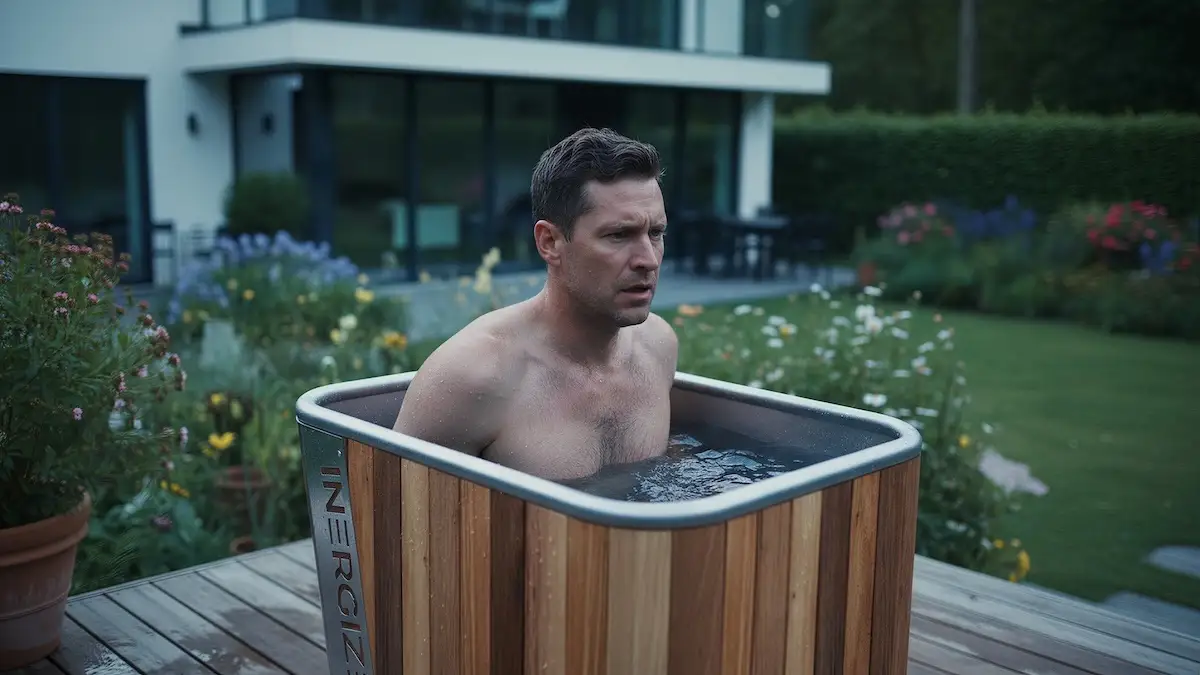
Cold water immersion (CWI) has been practiced since antiquity. In ancient Greece, cold baths were already an integral part of daily life. Hippocrates, considered the father of medicine, prescribed cold water baths to his patients to stimulate circulation and strengthen the body. Athletes of the era practiced cold baths in the bathing facilities adjacent to the palestrae (gymnasiums). Today, cold bath practice has once again been popularized by elite athletes and social media. The practice of ice baths, greatly facilitated by the use of Cold Plunges, is increasingly common for recovery and general health—a practice that is now also well studied, with numerous benefits that are proven and scientifically demonstrated.
Range recommended by the Cleveland Clinic and ACSM for a safe start. Advanced practitioners can go down to 39–50°F immersions.
Optimal session length for muscle recovery according to meta-analyses. Start with 1 to 3 minutes.
Recommended frequency to combine benefits while respecting the body's natural rhythms.
Reduces Muscle Soreness (DOMS)
After an intense or prolonged workout, numerous micro-tears appear in muscle fibers. These micro-tears trigger an inflammation response responsible for soreness that can appear between 12 and 72 hours after exercise—a condition also known as Delayed Onset Muscle Soreness (DOMS).
Cold water immersion acts as a powerful vasoconstrictor: by reducing blood flow to the muscles, it limits local inflammation and tissue edema.
A 2025 meta-analysis of 55 randomized controlled trials concluded that medium-duration CWI (10–15 min) at moderate temperature (11–15°C) was the most effective protocol for reducing DOMS, while low-temperature CWI (5–10°C) yielded the best results on biochemical markers and neuromuscular recovery. The relief is particularly notable after eccentric-intensive exercises (downhill running, heavy squats).
Reduces Post-Exercise Inflammation
To understand the post-exercise inflammation mechanism, it's worth examining cytokines. Cytokines are small messenger proteins whose role is to coordinate the body's defenses. Certain cytokines, called "pro-inflammatory" (such as TNF-α and IL-6), trigger inflammation—a useful and necessary reaction in the short term, particularly for repairing muscle micro-lesions and fighting infections. However, when this inflammatory response is too intense or prolonged, it becomes counterproductive, leading to persistent pain, slowed recovery, and even chronic injuries.
This is where cold water comes in. Upon entering the bath, the cold triggers vasoconstriction, slowing circulation and limiting the influx of these inflammatory cytokines to damaged muscles. Upon exiting, the body warms up and compensatory vasodilation kicks in: vessels reopen, accelerating the elimination of metabolic waste (lactate, free radicals) and promoting the delivery of fresh nutrients to repairing tissues—a mechanism sometimes compared to a "self-cleaning biological pump."
A meta-analysis published in PLOS ONE (2025, 11 randomized trials) showed that CWI causes an increase in inflammation in the very short term (immediately and 1 hour after immersion), before producing anti-inflammatory effects in the hours that follow. Inflammation is therefore not simply "suppressed" by cold—it is modulated over time, allowing the body to benefit from the initial repair phase while limiting excess.
Accelerates Overall Athletic Recovery
For athletes and dedicated fitness enthusiasts who string together competitions or high-frequency training sessions, reducing recovery time is a strategic priority. A systematic review with meta-analysis published in Sports Medicine (Moore et al., 2022) shows that cold water immersion is an effective recovery tool after high-intensity exercise. Positive results were demonstrated for muscular power, soreness, and perceived recovery within 24 hours post-effort, particularly in sports with repetitive demands like soccer, rugby, or CrossFit.
Several converging studies show, however, that systematic cold bath use after every strength training session attenuates hypertrophy gains and can reduce strength gains. Roberts et al. (2015, Journal of Physiology) demonstrated that CWI blocks satellite cell activation and anabolic signaling pathways (mTOR). For bodybuilding or powerlifting practitioners, the ACSM recommends delaying cold exposure by 4 to 6 hours after a resistance training session to minimize this negative effect.
Cold water immersion is not a miracle solution. It's one tool among many, particularly effective in competitive contexts with short recovery windows. On the other hand, it can be counterproductive when used systematically after strength training sessions targeting hypertrophy or maximal force output.
— Synthesis of the scientific literature on CWI (ACSM, Roberts et al., Moore et al.)
Improves Sleep Quality
Thermoregulation plays a fundamental role in sleep onset and maintenance. Core body temperature must naturally drop by about 1°C for sleep to occur. By lowering body temperature, cold baths can facilitate this mechanism.
A study conducted on long-distance runners revealed that whole-body CWI (head submerged) at approximately 55°F (13°C) for 10 minutes reduced nighttime micro-arousals and periodic limb movements, while increasing the proportion of slow-wave sleep (deep sleep) in the first part of the night—a phase critical for muscle regeneration and memory consolidation.
Sleep results remain heterogeneous, however. Other studies found no significant differences in overall nightly sleep architecture after CWI. Head submersion appears to be a determining factor in the positive outcomes observed.
Boosts the Immune System
Repeated cold exposure may act as a form of "training" for the immune system. Observational data show that regular cold shower practitioners have a 29% reduction in sick days and report better perceived energy levels.
A landmark study published in PNAS (Kox et al., 2014, Proceedings of the National Academy of Sciences) showed that participants trained in the "Wim Hof Method" could actively modulate their innate immune response to a bacterial endotoxin, producing more anti-inflammatory mediators and fewer pro-inflammatory cytokines.
This protocol combined multiple practices—cold immersion, meditation, and breathing techniques (cyclic hyperventilation followed by breath retention). The observed effects cannot therefore be attributed to cold alone: a follow-up study (Zwaag et al., 2022) demonstrated that it is the combination of breathing + cold that produces the bulk of the immune response, not cold exposure in isolation.
Reduces Stress and Improves Mood
The thermal shock of cold water triggers a massive release of catecholamines. A study by Reed et al. (2023, Journal of Thermal Biology) measured a 250% increase in plasma dopamine—also known as the "pleasure hormone"—after cold water immersion, accompanied by a 47% drop in cortisol in the three hours following exposure. Dopamine is a central neurotransmitter in motivation, pleasure, and mood regulation. This neurochemical surge produces an intense sense of well-being after immersion—often described as "mental clarity."
A meta-analysis published in 2025 in PLOS ONE synthesizing 11 randomized trials confirmed that CWI significantly reduced perceived stress markers 12 hours after immersion. However, no significant effect on stress was detected immediately, at 1h, 24h, or 48h post-exposure—suggesting that the stress benefit is delayed, not immediate.
Strengthens Mental Resilience and Focus
Immersing yourself in 41°F (5°C) water is a profoundly uncomfortable experience. The brain must actively override the fight-or-flight response of the sympathetic nervous system to stay in. This repeated practice—deliberately entering discomfort while maintaining calm, controlled breathing—is a form of mental training that transfers to other stressful situations in everyday life.
An article published in the Journal of Neuropsychiatry and Clinical Neurosciences (American Psychiatric Association, 2025) proposes the concept of "neurohormesis": controlled cold exposure would activate the neuroendocrine axis, increasing the release of beneficial neurotransmitters and growth factors. These mechanisms could strengthen emotional regulation, improve tolerance to discomfort, and reduce anxious reactivity. Regular practitioners report a greater ability to stay calm under pressure and improved focus.
Improves Heart Rate Variability (HRV) and Autonomic Nervous System Health
Heart Rate Variability (HRV) is considered one of the best biomarkers of recovery and overall cardiovascular health. High HRV reflects good vagal tone and the adaptive capacity of the autonomic nervous system.
A review published in the Journal of Thermal Biology (Esperland et al., 2024) analyzed 24 studies and concluded that CWI significantly increases post-immersion parasympathetic activity (the "rest and recovery" system), resulting in a measurable improvement in HRV. These effects are particularly pronounced in individuals with low baseline HRV, such as overreached athletes or chronically stressed individuals.
Conclusion: Ice Baths Are a Recovery Tool—Not a Miracle Cure
Ice baths offer a set of benefits documented by numerous multi-source studies (ACSM, Mayo Clinic, Cleveland Clinic, PNAS, PLOS ONE): reduced soreness and inflammation, improved sleep, modulated immune response, stress regulation, and enhanced mental resilience. These effects are real, but they depend heavily on consistency, temperature, immersion duration, and individual profile.
Cold water exposure complements a healthy lifestyle, but does not replace quality sleep, proper nutrition, or a well-structured training program. It's a supplementary tool that delivers the most value when integrated into a comprehensive and consistent recovery routine. It should be avoided immediately after strength training sessions targeting hypertrophy.
If you're new to cold therapy: start at 59°F (15°C) for 1 to 3 minutes, progress over several weeks toward 50–54°F (10–12°C) and durations of 10–15 minutes, and never practice alone during your first sessions.