Rowing Machine: 7 Medical Contraindications to Know Before You Start
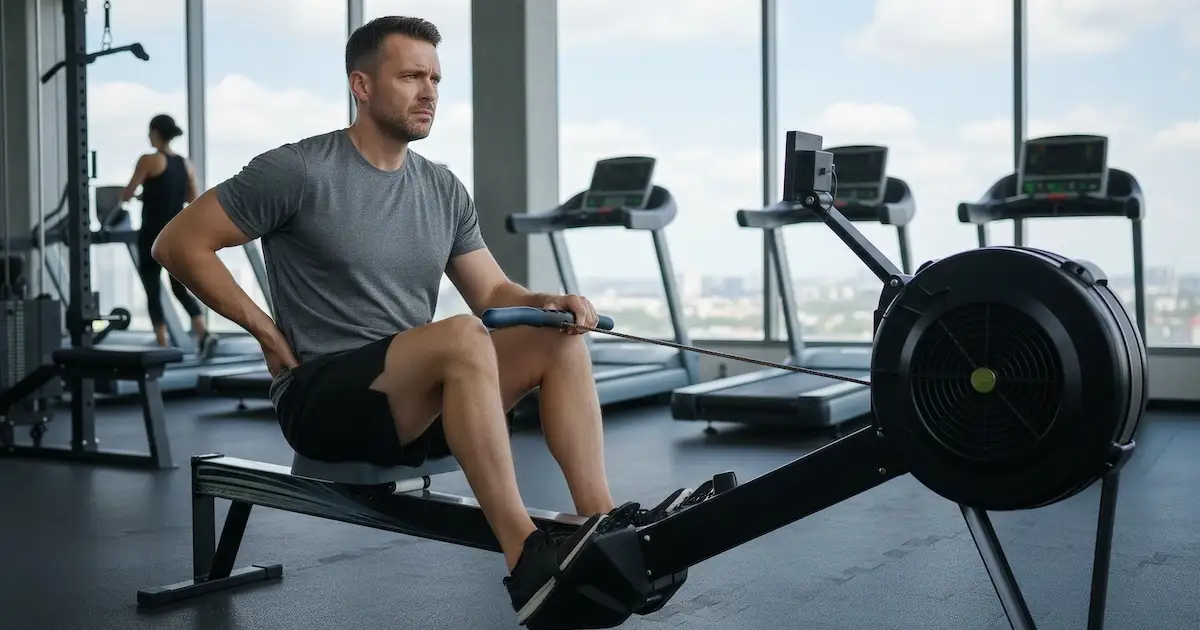
The rowing machine is a very popular piece of fitness equipment, often presented as one of the most complete: it engages a large portion of your muscle groups while providing an effective cardiovascular workout, generally with low joint impact. However, like any physical activity, certain medical conditions may limit its use or even temporarily contraindicate it. If you're considering starting or resuming rowing training, a medical consultation is recommended if you have any doubts, medical history, or unusual symptoms.
1. Cardiovascular Diseases
Rowing can be an intense exercise that places significant demands on your cardiovascular system (increased heart rate and blood pressure). In some people, this effort can pose increased risk if the condition isn't stabilized or if the return to exercise is too rapid. Without medical advice, intense physical activity (including rowing) should be avoided in people with:
- Recent myocardial infarction (heart attack)
- Unstable angina (unpredictable chest pain)
- Uncontrolled cardiac arrhythmia
- Decompensated heart failure
- Severe uncontrolled hypertension (for example > 200/110 mmHg)
- Active myocarditis, pericarditis, or endocarditis
- Known or suspected aortic dissection
Recovery time matters. After a heart attack, cardiac surgery, or an acute cardiovascular event, your heart needs time to recover. The return to exercise should be progressive, ideally within a cardiac rehabilitation program when indicated.
Listen to your body. Even without a known diagnosis, stop exercising and consult promptly if you experience:
- Chest pain or pressure (especially if it radiates to your arm, jaw, or back)
- Unusual shortness of breath, disproportionate to the intensity of the effort
- Palpitations (racing or irregular heartbeat)
- Dizziness, faintness, persistent lightheadedness
- Sudden or unusual fatigue
- Cold sweats without explanation
2. Back and Spine Conditions
Rowing strongly engages the posterior chain (glutes, hamstrings, core muscles), including the lumbar region. However, rowing doesn't necessarily involve significant lumbar flexion when technique is correct. The movement should primarily occur through a hip hinge, with a neutral pelvis and an engaged core.
In practice, the risk to your back mainly comes from poor technique (rounded back, lack of core engagement, jerky pulling), rather than the movement itself. If you already have pain or a diagnosed condition, it's best to seek medical or physical therapy advice before resuming, and to learn the correct movement pattern.
If you're experiencing significant or recent back pain, you may temporarily consider a better-tolerated alternative, such as an elliptical (or an exercise bike), while waiting for supervised recovery.
Herniated Disc and Sciatica
A herniated disc occurs when an intervertebral disc ruptures and its contents can compress a nerve root. Repeated trunk flexion and a rounded posture can increase disc stress. On a rowing machine, incorrect technique can therefore worsen symptoms, especially when there's pain radiating down the leg (sciatica).
Acute Low Back Pain
During acute low back pain, rowing is generally not recommended at the start. The prolonged seated position, combined with the pulling motion, can perpetuate pain if the core isn't properly stabilized. During this phase, gentle movements and progressive return are often preferable, ideally with a professional (physician, physical therapist).
Note: In some patients with stabilized chronic low back pain, rowing may be considered under certain conditions. With rigorous technique (neutral pelvis, core engagement, smooth movement) and appropriate intensity, core strengthening can help relieve some pain. The distinction between absolute and relative contraindication depends on the diagnosis and stage of the condition.
3. Knee Conditions
Rowing is often described as "low-impact" because there's no ground shock like in running. However, it involves repeated knee flexion. In some people, this range of motion can be painful or poorly tolerated, especially at first if technique isn't mastered. Gradual progression is essential.
Severe Knee Osteoarthritis
Osteoarthritis involves degradation of joint cartilage. With advanced osteoarthritis, deep flexion can increase pain. On a rowing machine, the flexion angle can be significant, which can become uncomfortable if osteoarthritis is severe.
Mild to moderate osteoarthritis isn't necessarily a contraindication: the absence of impact and the smooth movement can help preserve mobility. The key is adaptation: moderate resistance, reduced range of motion if necessary, and stopping if you feel pain.
Meniscal and Ligament Injuries
Meniscus or ligament injuries (ACL, PCL) require particular attention, especially after surgery. Recovery follows a rehabilitation protocol, and rowing is generally only reintroduced with approval from your surgeon and/or physical therapist.
4. Shoulder Conditions
Rowing engages your shoulders, particularly the rotator cuff, through a repetitive pulling motion. Some shoulder pain can be aggravated, especially if the load is high, if posture is unbalanced, or if fatigue leads to compensation.
Shoulder Tendinitis and Bursitis
Rotator cuff tendinopathies (often called "tendinitis") and bursitis can be perpetuated by repetitive pulling. During a session, the number of cycles is high: if tissues are irritated, pain can develop or increase.
Subacromial Impingement
Subacromial impingement occurs when certain tendons are compressed during specific movements. Rowing generally involves less arm elevation than other activities like swimming or overhead weight training. That said, in some people, the repetitive pulling motion can still maintain irritation, especially if technique is imperfect, if resistance is too high, or if posture isn't optimal.
Practical tip: If you have shoulder pain, an exercise bike, walking, or certain supervised cardio forms may be temporarily more comfortable. If pain persists, seek medical or physical therapy advice.
5. Pregnancy (Especially High-Risk Pregnancy)
Pregnancy isn't, in itself, a contraindication to exercise. On the contrary, moderate physical activity is often encouraged when there are no complications. Rowing may be possible in early pregnancy for those who were already accustomed to it, with adapted intensity and monitored comfort.
However, certain situations require avoiding exercise (or strictly limiting it): high-risk pregnancy, significant pain, bleeding, threatened preterm labor, preeclampsia, placenta previa (per medical advice), etc.
As pregnancy progresses, the seated position and forward flexion can become uncomfortable. Abdominal compression can also be bothersome, especially in the third trimester. In this context, walking, swimming, or an exercise bike are often better tolerated. In all cases, seek advice from your healthcare provider before rowing during pregnancy.
6. Recent Surgery or Healing Injury
After surgery or a significant injury, your body needs time to heal. Resuming rowing too soon can compromise healing or cause recurrence (pain, inflammation, bleeding, tearing).
As a general guide, certain abdominal surgeries (appendectomy, hernia repair, cesarean section) often require several weeks before resuming exercise that engages the core. Orthopedic surgeries (back, knee, shoulder) may require more time and a personalized return-to-exercise protocol.
General rule: Get clearance from your surgeon or physician before resuming. Progression should be gradual: low resistance, short sessions, and symptom monitoring.
7. Severe or Poorly Controlled Respiratory Conditions
Rowing can quickly increase ventilation (faster and deeper breathing). With severe poorly controlled asthma, advanced COPD, respiratory failure, or abnormal shortness of breath in daily life, the intensity of rowing may be difficult to tolerate.
This doesn't mean you should avoid all activity: on the contrary, an adapted program (often supervised) can be beneficial. But it's best to validate the intensity and type of exercise with a healthcare professional and prioritize gradual progression.
When Should You See a Doctor?
The rowing machine is an excellent tool for improving cardiovascular fitness, burning calories, and strengthening your entire body. It often offers more benefits than contraindications, provided you respect proper progression and technique.
However, it's best to obtain medical advice before starting if you have cardiovascular history, back pain, joint conditions, high-risk pregnancy, recent surgery, or unusual shortness of breath. If temporarily incompatible, alternatives like an exercise bike, elliptical, treadmill, walking, or swimming can be suggested. Smart training adapts the activity to you, not the other way around. When in doubt, always seek medical advice.
FAQ
Is rowing bad for your back?
No, rowing isn't inherently bad for your back. With correct technique (hip hinge, neutral pelvis, engaged core), it can strengthen your core muscles and help improve posture. However, poor technique (rounded back, jerky pulling) or a pre-existing condition (herniated disc, acute low back pain) can make the practice painful. When in doubt, consult a healthcare professional.
Can you row with knee osteoarthritis?
It depends on the severity. Mild to moderate osteoarthritis generally isn't a contraindication: the smooth, impact-free movement can be beneficial. However, severe osteoarthritis with pain during deep flexion can be aggravated. Adjust the resistance, limit the range of motion, and stop if you feel pain.
Is rowing not recommended during pregnancy?
Rowing isn't systematically contraindicated during an uncomplicated pregnancy, especially in early pregnancy for those accustomed to it. However, high-risk pregnancies or certain symptoms (bleeding, pain, threatened preterm labor, etc.) require avoiding or limiting exercise. In the third trimester, position and abdominal discomfort may limit practice. Always consult your healthcare provider.
How long should you wait after surgery to resume rowing?
The delay depends on the type of procedure, your general condition, and rehabilitation protocol. After abdominal surgery, several weeks are often needed. After knee, shoulder, or back surgery, it may take several months. Always get clearance from your surgeon before resuming training.