Treadmill Electricity Cost: How Much Does It Really Cost?
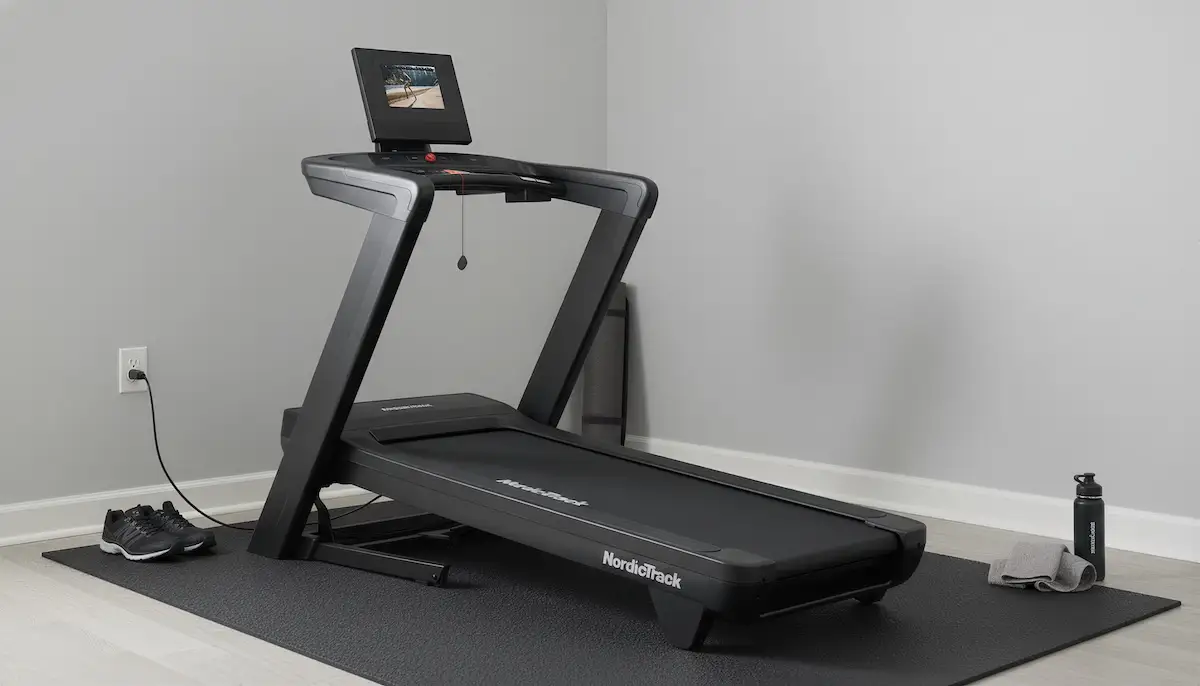
Thinking about buying a home treadmill? One common question is how much it will add to your electricity bill. Unlike ellipticals which can be self-powered, treadmills require a motor to move the belt—making them the most power-hungry cardio machines in your home gym. In this guide, we break down the real numbers and show you how to calculate your own costs.
Motorized Treadmills: How Much Do They Cost to Run?
Most home treadmills are motorized, meaning they require electricity to power the belt motor, console, and features like incline adjustment. The wattage varies significantly based on motor size and workout intensity.
Here's what you can expect to pay based on treadmill type and typical home usage:
| Treadmill Type | Wattage | Cost per Hour | Monthly Cost (10h) |
|---|---|---|---|
| Walking pad / Under-desk | 200-400W | $0.03 - $0.07 | $0.34 - $0.68 |
| Basic / Walking | 400-600W | $0.07 - $0.10 | $0.68 - $1.02 |
| Mid-range | 600-900W | $0.10 - $0.15 | $1.02 - $1.53 |
| High-performance | 900-1500W | $0.15 - $0.26 | $1.53 - $2.55 |
| Commercial grade | 1500-3000W+ | $0.26 - $0.51+ | $2.55 - $5.10+ |
*Based on US average electricity rate of $0.17/kWh.
Compare this to an elliptical's electricity cost: a plug-in elliptical uses 100-200W (about $0.20-0.50/month), and self-powered ellipticals cost nothing to operate. That's 3-10 times less than a treadmill.
Here are examples of motorized treadmills across price categories:
| Model | Brand | Price | Est. Cost/Month |
|---|---|---|---|
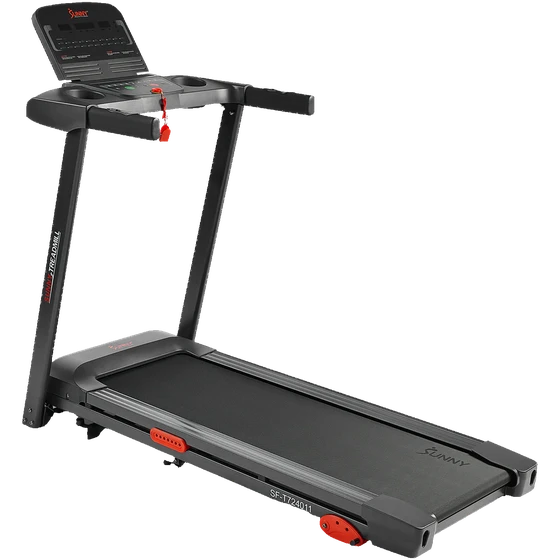 Active 300 Active 300
|
Sunny Health & Fitness | $499.99 | ~$0.70 |
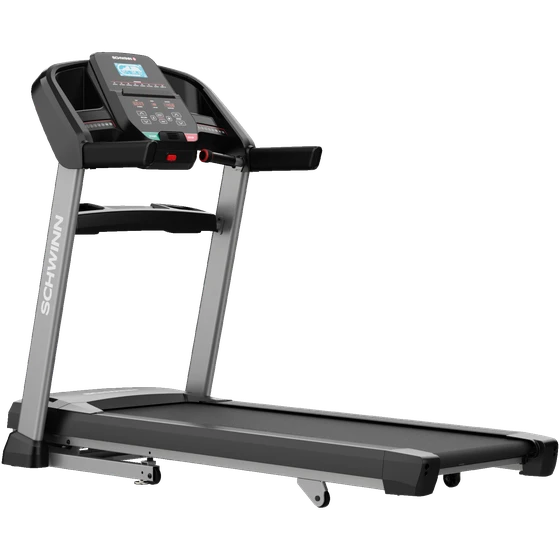 815 815
|
Schwinn | $1,099.00 | ~$1.30 |
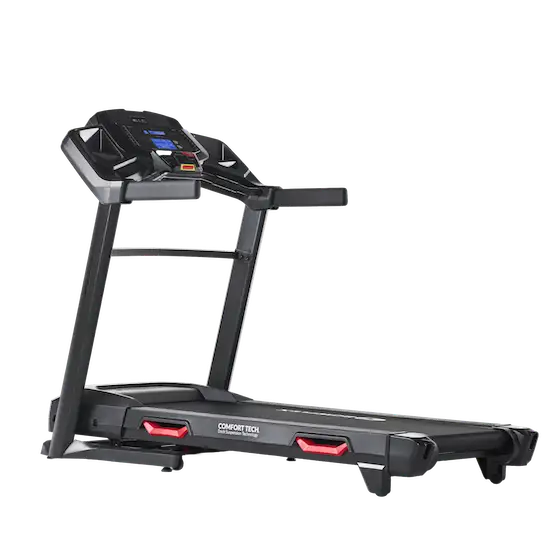 BXT8J BXT8J
|
BowFlex | $1,299.00 | ~$2.00 |
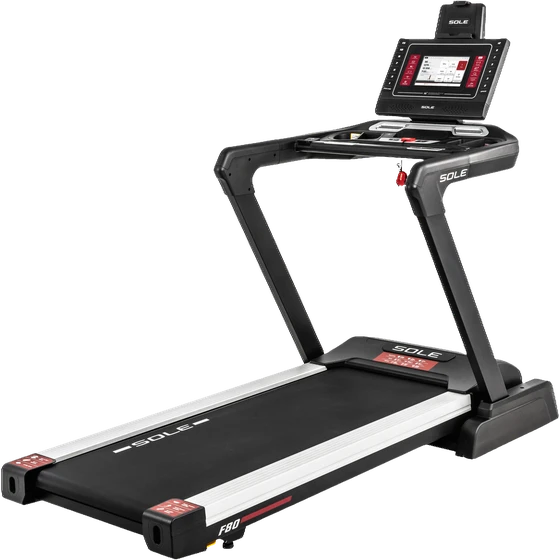 F80 F80
|
Sole | $1,799.99 | ~$3.00+ |
*Monthly cost based on 10 hours of use at US average rate of $0.17/kWh.
Keep in mind that electricity rates vary significantly by state. Residents in Idaho pay around $0.12/kWh, while those in California face rates closer to $0.34/kWh. You can check current rates in your area on the U.S. Energy Information Administration website.
Manual Treadmills (or Self-Powered): Zero Electricity Cost
Want to skip the electricity bill entirely? Manual and curved treadmills—also known as hamster treadmills—run purely on human power. There's no motor; the belt moves only when you push it with your stride.
Manual flat-belt treadmills are the budget option, typically costing $200-$400. Since you power the belt yourself, it moves in short bursts with each step rather than flowing smoothly. These models are closer to a walking pad than real treadmills—running on them feels unnatural.
Curved treadmills are the premium manual treadmills. The curved design makes running feel natural—your foot lands on the curve and the belt responds instantly to your pace. Popular in CrossFit boxes and high-intensity training studios.
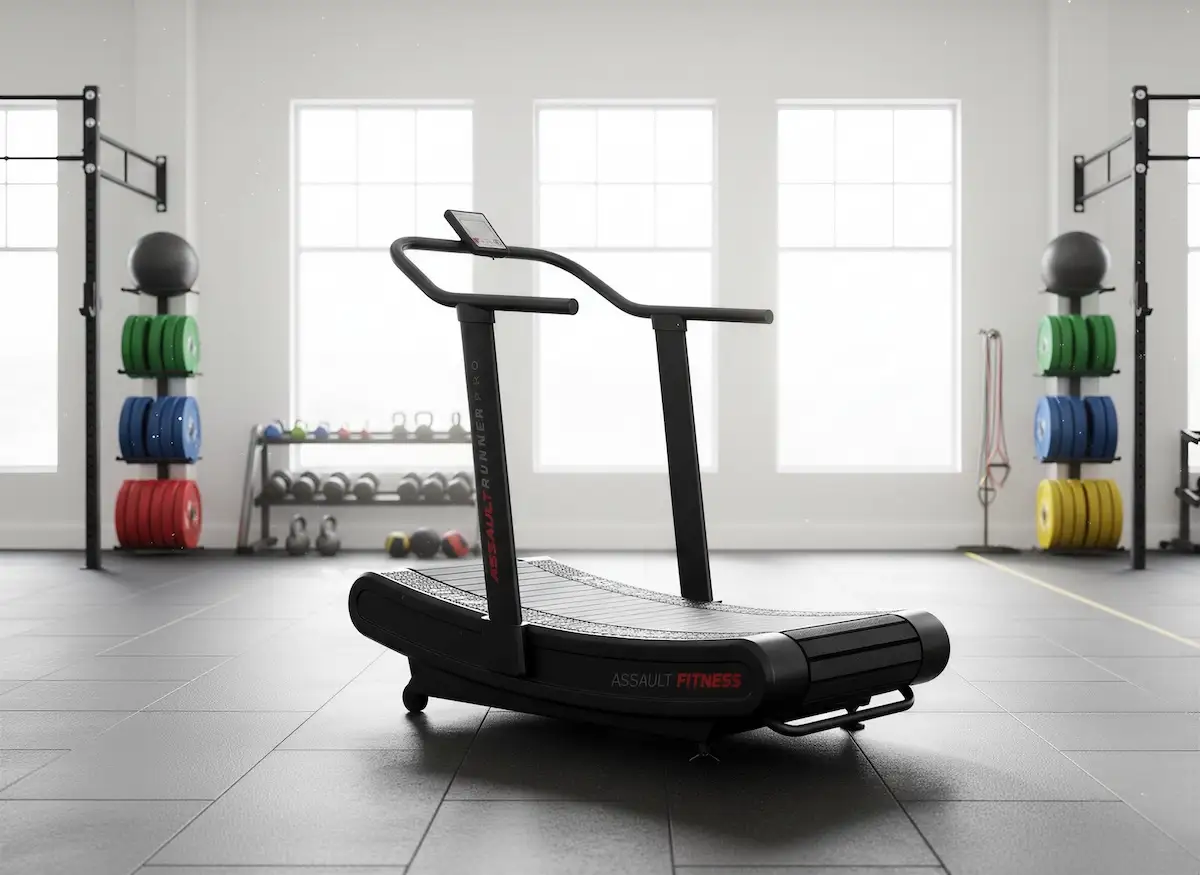
Benefits of manual treadmills:
- Zero electricity cost—no impact on your utility bill
- Place anywhere—no need to be near an outlet
- No standby drain—nothing to unplug
- Lower maintenance—no motor means fewer parts that can break
- Harder workout—you generate all the momentum, burning more calories
- Instant speed changes—no buttons, just speed up or slow down naturally
The tradeoff? Curved treadmills are expensive ($3,000-$6,000+), and flat manual models aren't suitable for running.
| Model | Brand | Price |
|---|---|---|
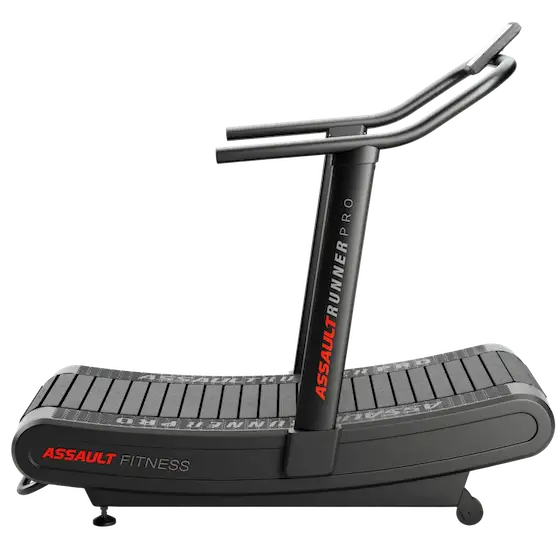 AssaultRunner Pro AssaultRunner Pro
|
Assault Fitness | $3,499.00 |
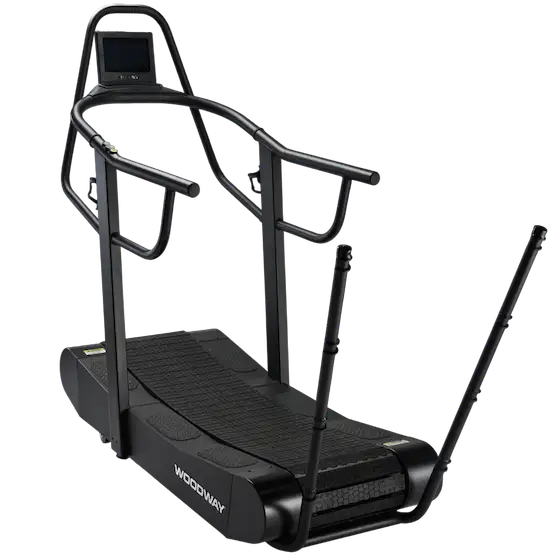 Curve FTG Curve FTG
|
Woodway | $7,999.00 |
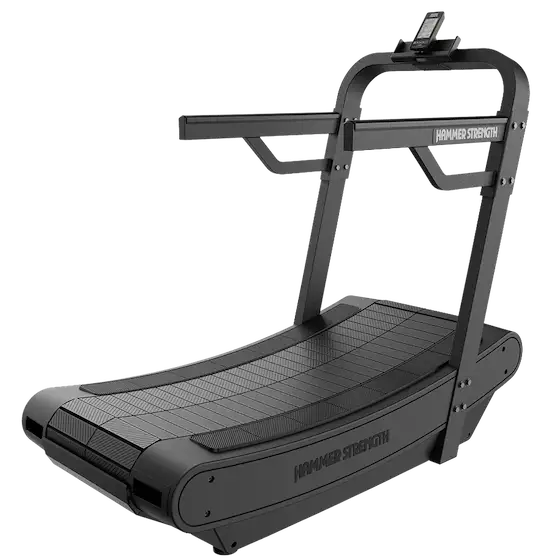 HD Tread HD Tread
|
Hammer Strength | $9,196.00 |
How to Calculate Your Treadmill's Electricity Cost
Want to know your exact cost? Here's a simple 3-step formula:
Step 1: Find your treadmill's wattage. Check the label near the power cord or look in the user manual. Let's say it's 800W.
Step 2: Convert to kilowatts and multiply by hours used. If you run 1 hour per day, 5 days a week, that's 20 hours per month.
Calculation: 800W ÷ 1000 = 0.8 kW × 20 hours = 16 kWh/month
Step 3: Multiply by your electricity rate. At $0.17/kWh: 16 kWh × $0.17 = $2.72/month
That's about the price of a coffee—more than an elliptical, but still very affordable for the convenience of home workouts.
Factors That Affect Power Consumption
Not all treadmill sessions use the same amount of electricity. Several factors influence how much power your machine draws:
Speed: Running at 8 mph consumes significantly more energy than walking at 3 mph. The motor works harder to keep up with faster belt speeds.
Incline: Using an incline forces the motor to work against gravity, increasing energy draw. A 15% incline can increase power consumption by 20-30%.
Motor horsepower: Treadmills with higher HP motors (3.0-4.0 HP) draw more electricity than lower-powered models (1.5-2.0 HP), especially at higher speeds.
User weight: Heavier users increase the load on the motor. More resistance means the motor needs more power to maintain speed.
Belt condition: A dry or worn belt creates friction, forcing the motor to work harder. Regular lubrication keeps consumption lower.
Extra features: Touchscreens, built-in fans, speakers, and Bluetooth connectivity all add to electricity consumption. A large HD display can add 50-100W to your usage.
Why Do Treadmills Use So Much Electricity?
You might wonder why treadmills consume so much more power than other cardio machines. The answer lies in how they work:
Continuous motor operation: Unlike an elliptical or exercise bike where you provide the motion, a treadmill's motor must constantly spin the belt at your chosen speed. The motor does the work, not you.
Fighting your weight: Every step you take on a treadmill pushes down on the belt, creating resistance. The motor must overcome this resistance continuously—essentially carrying part of your body weight with every stride.
Higher power motors: To handle running speeds and heavier users, treadmills need motors rated at 2.0-4.0+ HP. Compare this to an elliptical, which might need just 100-200W for electronic resistance.
Comparison: A self-powered elliptical uses 0W. A plug-in elliptical uses 100-200W. A mid-range treadmill uses 600-900W—4 to 9 times more power. That's the cost of having a motor move the ground beneath your feet instead of moving your legs through space.
Tips to Reduce Your Treadmill's Energy Use
While treadmill electricity costs are already reasonable, here are ways to reduce them further:
Walk more, run less: Walking at 3-4 mph uses roughly half the power of running at 7-8 mph. If weight loss is your goal, longer walks can be just as effective as shorter runs.
Skip the incline sometimes: Flat running uses less power than incline training. Mix it up based on your goals.
Maintain your belt: A well-lubricated belt reduces friction, letting the motor work more efficiently. Lubricate every few months according to your manual.
Unplug after use: Treadmills consume standby power (5-15W) when plugged in but not running. Unplugging completely eliminates this phantom drain.
Use eco mode: Many modern treadmills offer power-saving modes that reduce display brightness and optimize motor efficiency.
Consider a curved treadmill: If you're buying new and electricity cost is a major concern, a self-powered curved treadmill eliminates the electricity bill entirely—though the upfront cost is significantly higher.
Treadmill vs Other Cardio Machines: Power Comparison
How does a treadmill compare to other home cardio equipment? Here's a quick comparison:
| Machine Type | Typical Wattage | Monthly Cost (10h) |
|---|---|---|
| Elliptical (self-powered) | 0W | $0.00 |
| Exercise bike (magnetic) | 0-50W | $0.00 - $0.09 |
| Rowing machine | 0-100W | $0.00 - $0.17 |
| Elliptical (plug-in) | 100-200W | $0.17 - $0.34 |
| Treadmill (curved/manual) | 0W | $0.00 |
| Treadmill (walking) | 400-600W | $0.68 - $1.02 |
| Treadmill (running) | 600-1500W | $1.02 - $2.55 |
| Treadmill (commercial) | 1500-3000W+ | $2.55 - $5.10+ |
Treadmills are the most power-hungry cardio machines due to their belt motors. If electricity cost is a primary concern, consider an elliptical (especially self-powered models), an exercise bike, or a rowing machine—all of which use significantly less power.
For a detailed breakdown of elliptical energy consumption, see our complete guide on elliptical electricity costs.
FAQ
Does a treadmill use electricity when plugged in but off?
Yes. Most treadmills draw a small amount of standby power (5-15W) when plugged in but not running. Over a month, this adds only $0.06-$0.18 to your bill, but unplugging eliminates it entirely.
Are there treadmills that don't use electricity?
Yes. Manual treadmills and curved treadmills run entirely on your own power. The belt moves when you walk or run, with no motor required. Popular models include the Assault Fitness AssaultRunner Classic and the Technogym Skillmill. These cost more upfront but have zero electricity costs.
Is a treadmill cheaper to run than a gym membership?
Yes, significantly. Running a treadmill costs $1-5 per month in electricity. Even a budget gym membership runs $20-30 monthly. Over a year, a home treadmill saves you hundreds in membership fees, though you'll need to factor in the upfront purchase cost.
Do treadmills use more electricity than ellipticals?
Yes, much more. A typical treadmill uses 600-1500W, costing $1-3 per month for regular use. A plug-in elliptical uses just 100-200W (about $0.20-0.50/month), and self-powered ellipticals cost nothing to operate. This is because ellipticals don't need a motor to move the pedals—you provide the motion.
Conclusion
A home treadmill is the most power-hungry cardio machine you can own, but the electricity cost is still very reasonable—most users pay between $1 and $3 per month, a fraction of what a gym membership costs. If minimizing electricity usage is important to you, consider a self-powered curved treadmill (zero electricity cost) or switch to an elliptical, which uses 3-10 times less power. Either way, the convenience of home workouts far outweighs the modest addition to your electricity bill.