Elliptical Electricity Cost: Real Numbers & How to Calculate Yours
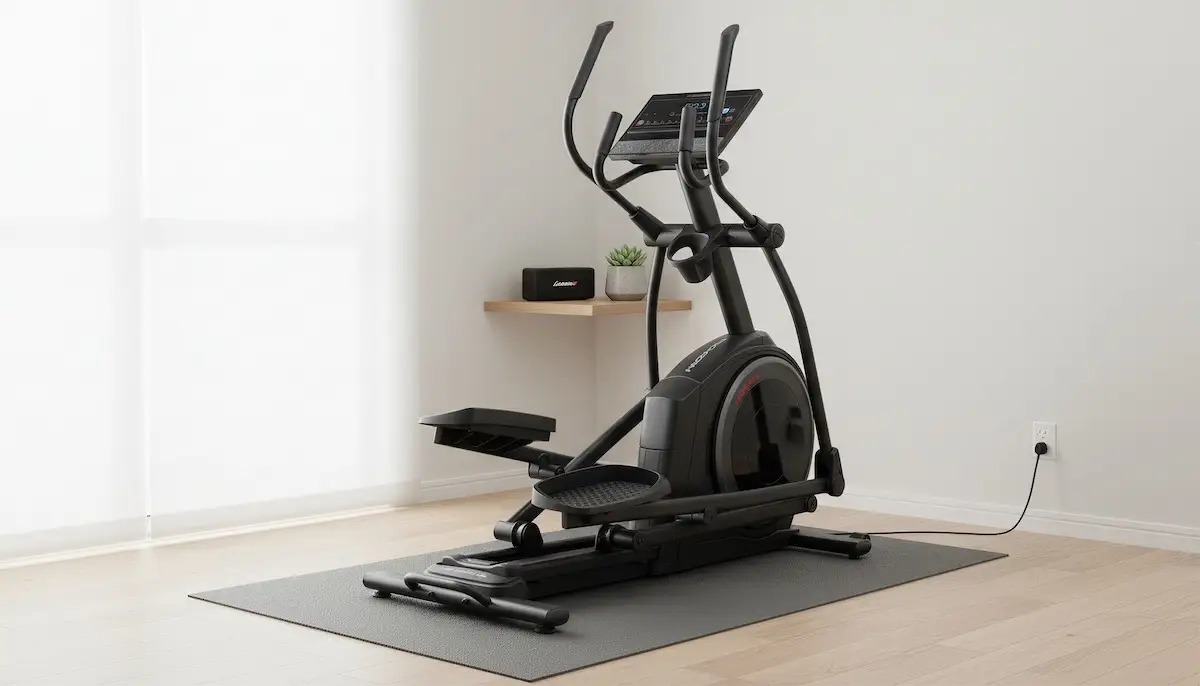
Thinking about buying a home elliptical? One common question is how much it will add to your electricity bill. The good news: ellipticals are among the most energy-efficient cardio machines available. Unlike treadmills, they don't have a motor constantly pushing a belt. Many models are even self-powered, meaning they generate their own electricity through your pedaling motion. In this guide, we break down the real numbers and show you how to calculate your own costs.
Plug-In Ellipticals: How Much Do They Cost to Run?
Some ellipticals require a standard electrical outlet to operate. These include most entry-level models with basic magnetic resistance, plug-in electromagnetic models, and commercial-grade machines with large touchscreens.
Here's what you can expect to pay based on elliptical type and typical home usage:
| Elliptical Type | Wattage | Cost per Hour | Monthly Cost (10h) |
|---|---|---|---|
| Magnetic (battery console) | 0W | $0.00 | $0.00 |
| Magnetic (plug-in console) | 5-10W | ~$0.002 | ~$0.02 |
| Electromagnetic (plug-in) | 100-300W | $0.02 - $0.05 | $0.20 - $0.50 |
| Commercial grade | 200-400W+ | $0.03 - $0.07 | $0.30 - $0.70 |
*Based on US average electricity rate of $0.17/kWh. Large touchscreen models may draw higher peaks briefly at startup.
Why are magnetic ellipticals so cheap to run? On a magnetic elliptical, the resistance comes from permanent magnets—no electricity required. The only component drawing power is the console itself (the LCD screen, buttons, and heart rate sensors), which uses about 5-10W. That's less than a single LED light bulb. Electromagnetic models, by contrast, need electricity to generate the magnetic field that creates resistance, which is why they draw 100-300W.
Even at the highest end, a commercial-grade elliptical with a large touchscreen costs under $1 per month to operate—a fraction of what a treadmill costs. Basic magnetic models with battery-powered consoles use zero mains electricity and are completely free to run.
Here are examples of plug-in ellipticals across price categories:
| Model | Brand | Price | Wattage | Cost/Month |
|---|---|---|---|---|
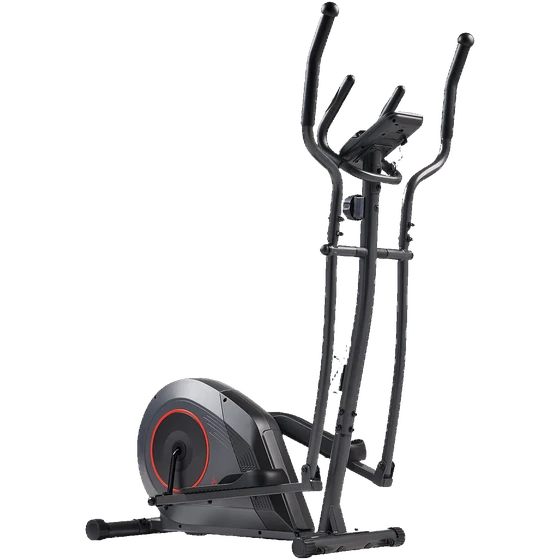 Corezy SF-E324005 Corezy SF-E324005
|
Sunny Health & Fitness | $319.99 | 5-50W | ~$0.02 |
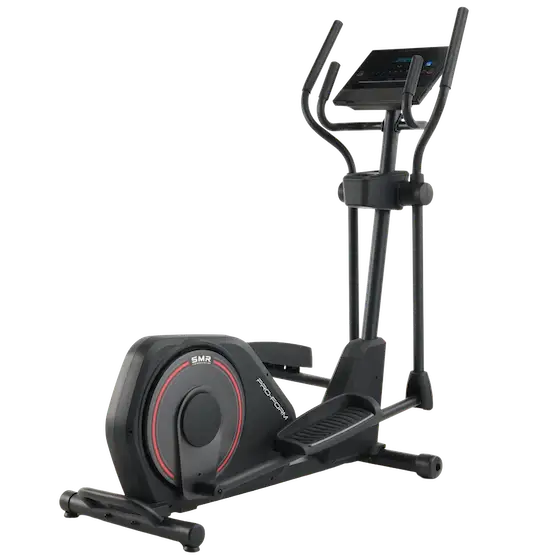 Sport Elliptical Sport Elliptical
|
ProForm | $799.99 | 100-150W | $0.17 - $0.26 |
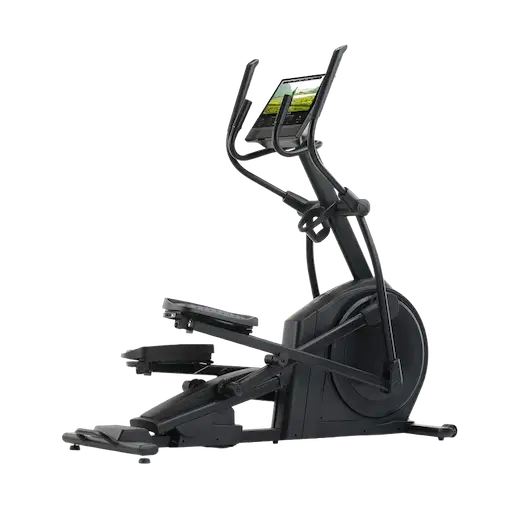 AirGlide 16 Elliptical AirGlide 16 Elliptical
|
NordicTrack | $2,499.99 | 150-200W | $0.26 - $0.34 |
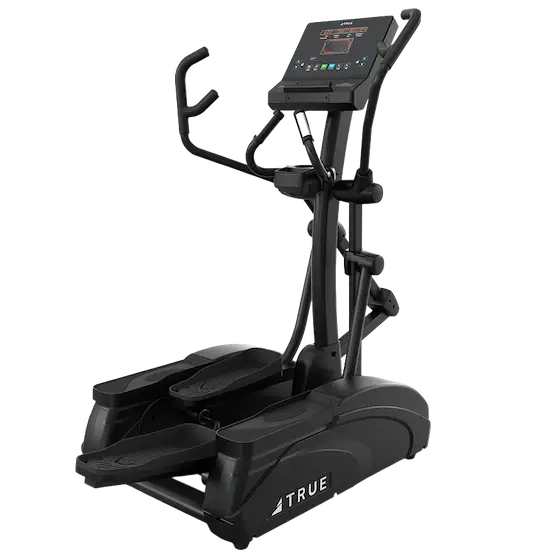 M50 M50
|
TRUE Fitness | $3,599.00 | 200-300W | $0.34 - $0.51 |
*Monthly cost based on 10 hours of use at US average rate of $0.17/kWh.
Keep in mind that electricity rates vary significantly by state. Residents in Idaho pay around $0.12/kWh, while those in California face rates closer to $0.34/kWh. You can check current rates in your area on the U.S. Energy Information Administration website.
Self-Powered Ellipticals: Zero Electricity Cost
One of the biggest advantages of ellipticals over other cardio machines is that many models are self-powered. These machines generate their own electricity through your pedaling motion, meaning they don't need to be plugged in at all—and cost absolutely nothing to operate.
Self-powered technology works by converting your kinetic energy into electrical power. As you pedal, a generator captures that energy and uses it to power the console, display, and electromagnetic resistance system. The harder you work, the more power you generate.
Benefits of self-powered ellipticals:
- Zero electricity cost — no impact on your utility bill
- Place anywhere — no need to be near an outlet
- Eco-friendly — reduces your carbon footprint
- Precise control — often paired with electromagnetic resistance
- No standby drain — no phantom power consumption
Self-powered models are common in mid-range to high-end ellipticals. Here are examples across price categories:
| Model | Brand | Price | Power Type | Cost/Month |
|---|---|---|---|---|
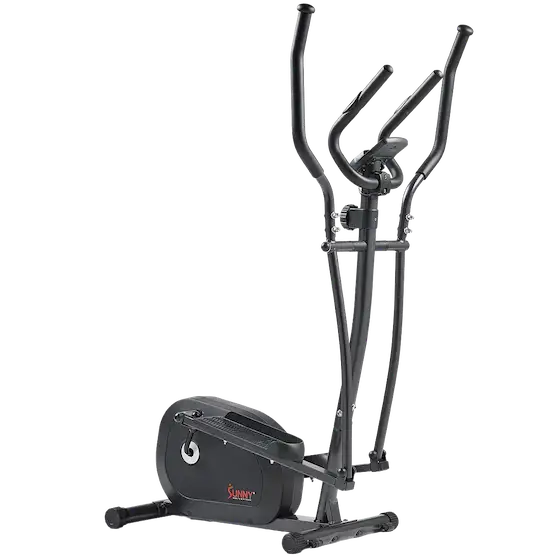 SF-E905SMART SF-E905SMART
|
Sunny Health & Fitness | $299.99 | Self-powered | $0.00 |
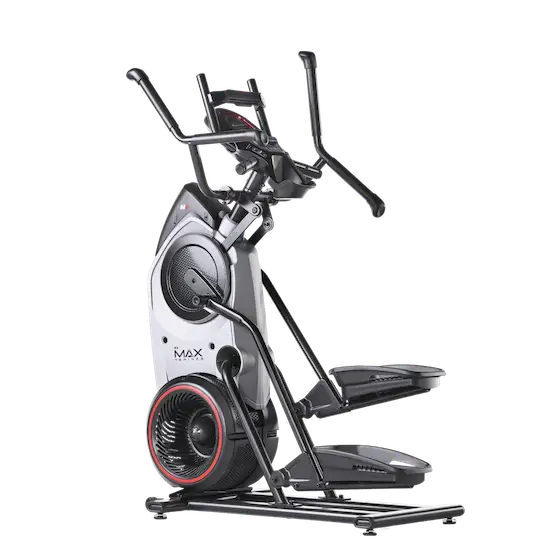 Max Trainer M6 Max Trainer M6
|
Bowflex | $999.00 | Self-powered | $0.00 |
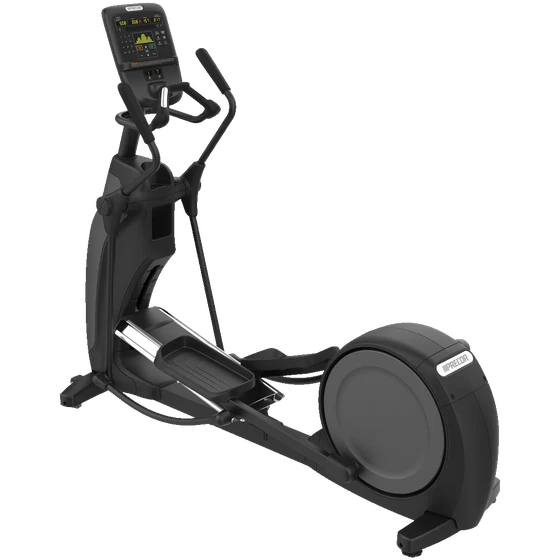 EFX 635 EFX 635
|
Precor | $11,500.00 | Self-powered | $0.00 |
*Monthly cost based on 10 hours of use at US average rate of $0.17/kWh.
How to Calculate Your Elliptical's Electricity Cost
If your elliptical requires power, here's a simple 3-step formula to calculate your exact cost:
Step 1: Find your elliptical's wattage. Check the label near the power cord or look in the user manual. Let's say it's 150W.
Step 2: Convert to kilowatts and multiply by hours used. If you exercise 1 hour per day, 5 days a week, that's 20 hours per month.
Calculation: 150W ÷ 1000 = 0.15 kW × 20 hours = 3 kWh/month
Step 3: Multiply by your electricity rate. At $0.17/kWh: 3 kWh × $0.17 = $0.51/month
That's less than the price of a bottle of water—and if you have a self-powered model, it's completely free.
Factors That Affect Power Consumption
Even among plug-in ellipticals, power consumption varies based on several factors:
Resistance type: Magnetic ellipticals with manual adjustment use almost no power (just batteries for the console). Electromagnetic models that adjust resistance electronically use more energy.
Console features: Large touchscreens, built-in speakers, and fans all increase electricity consumption. A basic LCD display uses far less than a 22-inch HD touchscreen.
Resistance level: Higher resistance levels on electromagnetic models require more current to generate the magnetic field, increasing power draw slightly.
Standby mode: Some ellipticals with always-on displays or WiFi connectivity consume power even when not in use (5-15W in standby).
Why Is Elliptical Power Consumption So Low?
You might wonder why ellipticals use so little electricity compared to other home appliances. The answer lies in how they work:
No heavy motor: Unlike a washing machine or air conditioner, an elliptical doesn't have a large motor doing mechanical work. The flywheel spins freely, and resistance comes from magnets—not from a motor fighting against your movement.
You provide the energy: The wattage ratings you sometimes see (like "500W elliptical") often refer to the maximum electrical capacity of the circuit, not actual power consumption. This doesn't mean the machine draws 500W continuously—it's more like the rated capacity of your home outlets. In reality, you—the user—provide most of the mechanical energy through your pedaling motion.
Power goes to electronics, not motion: Most electricity consumed by an elliptical powers the digital display, buttons, sensors, and (on electromagnetic models) the resistance coils. None of it goes toward moving the pedals—that's all you.
The result: even with daily use, an elliptical's electricity cost barely registers on your utility bill.
Practical Considerations
Since elliptical electricity costs are negligible, your decision shouldn't be based on energy savings. Here's what actually matters:
Outlet placement: Plug-in models need to be near an outlet. If your ideal workout spot is far from a plug, a self-powered elliptical gives you complete placement freedom.
Standby power: Some models with WiFi or always-on displays draw 5-15W when idle. This adds pennies to your bill, but if it bothers you, use a power strip with an on/off switch.
Self-powered trade-offs: Self-powered ellipticals cost $0 to run and offer placement flexibility, but they're typically mid-range or higher-priced models. Entry-level ellipticals are usually plug-in—but at $0.02/month, that's not a reason to spend more.
Elliptical vs Other Cardio Machines: Power Comparison
How does an elliptical compare to other home cardio equipment? Here's a quick comparison:
| Machine Type | Typical Wattage | Monthly Cost (10h) |
|---|---|---|
| Elliptical (self-powered) | 0W | $0.00 |
| Elliptical (plug-in) | 100-200W | $0.17 - $0.34 |
| Exercise bike | 0-100W | $0.00 - $0.17 |
| Rowing machine | 0-100W | $0.00 - $0.17 |
| Treadmill | 300-1500W | $0.51 - $2.55 |
Ellipticals are among the most energy-efficient cardio machines, comparable to rowing machines and exercise bikes (though connected models with screens use more). The difference with treadmills is particularly striking: even a basic walking treadmill uses 300-400W, while a high-performance running machine can draw 900-1200W or more. That's 3-10 times more than a plug-in elliptical—and infinitely more than a self-powered model.
For a detailed breakdown of treadmill energy consumption and running costs, see our complete guide on treadmill electricity costs.
FAQ
Does an elliptical use electricity when plugged in but off?
Some models do. Ellipticals with always-on displays, WiFi connectivity, or quick-start features can draw 5-15W in standby mode. Over a month, this adds about $0.06-$0.18 to your bill. Unplugging or using a switched power strip eliminates this.
Are there ellipticals that don't use electricity at all?
Yes. Self-powered ellipticals generate electricity from your pedaling motion. They power the console, display, and resistance system entirely from your workout. Many mid-range and high-end models like the SF-E905SMART are completely self-powered.
Is an elliptical cheaper to run than a treadmill?
Yes, significantly. A typical treadmill uses 600-1200W, costing $1-3 per month for regular use. A plug-in elliptical uses 100-200W (about $0.20-0.50/month), and self-powered ellipticals cost nothing to operate.
Do magnetic or electromagnetic ellipticals use more power?
It depends on the setup. Basic magnetic ellipticals with manual resistance use almost no electricity (just batteries for the console). Electromagnetic ellipticals need power to generate the magnetic field, but many are self-powered. Plug-in electromagnetic models use 100-200W during operation.
Conclusion
An elliptical is one of the most cost-effective cardio machines to operate. Self-powered models cost nothing in electricity, while plug-in versions add less than $1 per month to your bill—a fraction of what a treadmill costs to run. Either way, electricity costs should be the last thing holding you back from a home elliptical. Ready to find your perfect model? Check out our complete elliptical buying guide.