How to Choose an Elliptical Machine: The Complete Guide to Finding Your Perfect Fit
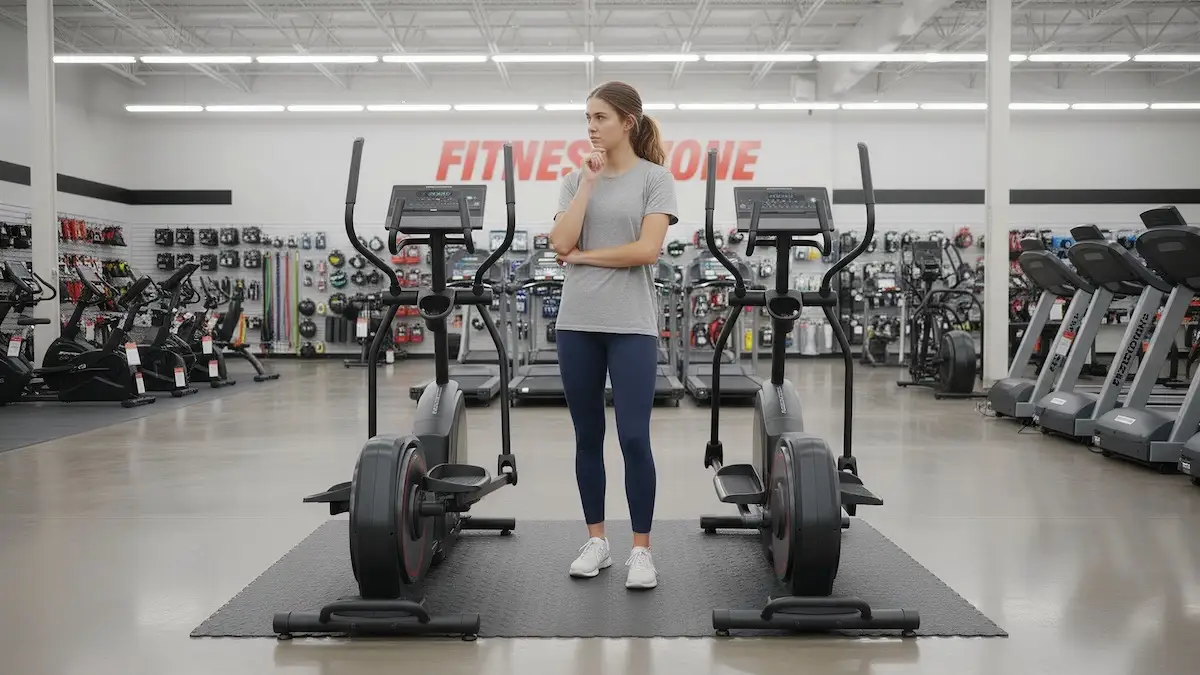
The elliptical machine has become a home fitness staple. It's a complete cardio machine that combines the benefits of a stationary bike, stepper, and cross-country skiing—all while protecting your joints. With dozens of models and prices ranging from around $200 to $3,000+, it's often hard to know how to choose the right elliptical. This guide walks you through the process step by step to identify the model that truly fits your needs, based on your body type, intended use, and budget.
Why Choose an Elliptical?
The elliptical stands out from other cardio equipment thanks to its smooth, continuous motion. Your feet stay in constant contact with the pedals, eliminating repeated impact on your joints. According to Harvard Health, this makes it an ideal choice for people with arthritis, knee pain, or those recovering from an injury.
A Full-Body Workout
Unlike an exercise bike or a treadmill that primarily work your lower body, the elliptical is more complete and engages a large portion of your muscles. The moving handlebars let you work both your upper and lower body simultaneously: quads, hamstrings, glutes, calves, plus biceps, triceps, chest, and back muscles. This full-body engagement increases calorie burn and improves cardiovascular endurance.
Elliptical vs Treadmill: Which Should You Choose?
Choosing between an elliptical and a treadmill is a common dilemma for first-time fitness equipment buyers. Both are effective for cardio, but the elliptical offers two major advantages:
- Zero impact: On a treadmill, every stride puts stress on your joints, while the elliptical reduces this mechanical stress while offering comparable calorie burn at similar intensity levels.
- More complete workout: The elliptical works both your upper and lower body thanks to the moving arms, while the treadmill primarily targets your legs.
That said, running on a treadmill generally burns more energy—but the comparison depends on many factors: incline, use of moving arms, and resistance level. For a detailed comparison, check out our article on elliptical vs treadmill.
Calories Burned on an Elliptical
According to Harvard Health Publishing, a 30-minute elliptical session burns approximately 270 to 378 calories depending on your weight (125 to 185 lb) at moderate intensity. The elliptical is therefore a useful tool in a weight loss strategy—as long as you're consistent and maintain a balanced diet.
Define Your Goals and Usage Frequency
Before comparing specs across different models, ask yourself a simple question: how often do you plan to use your elliptical and for what purpose? Your answer will largely determine the right price range and feature set for you.
Occasional Use: General Fitness
For 1 to 2 sessions per week of 20 to 30 minutes, an entry-level model with a 15 to 20 lb flywheel and manual magnetic resistance may be sufficient—as long as the machine is stable and the stride fits your height.
Recommended Elliptical Models for Occasional Use
| Model | Brand | Resistance | Price |
|---|---|---|---|
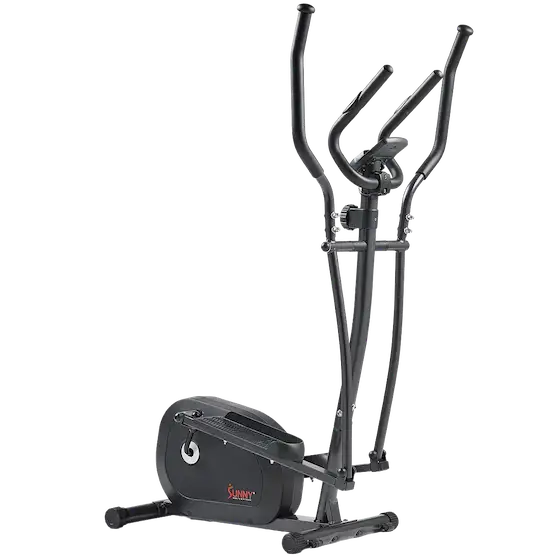 Sunny Health & Fitness SF-E905SMART Sunny Health & Fitness SF-E905SMART
|
Sunny Health & Fitness | magnetic | $299.99 |
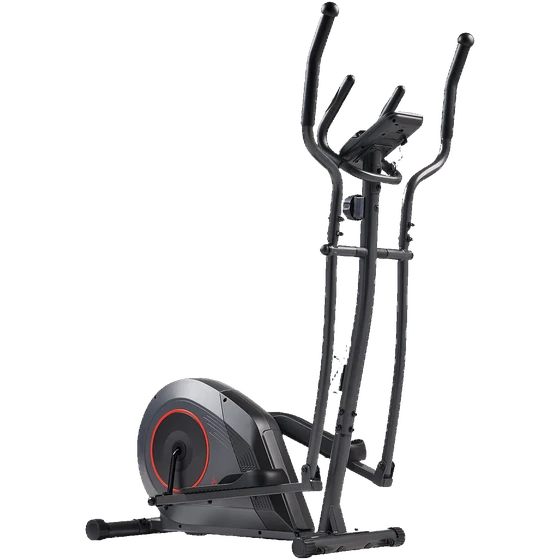 Sunny Health & Fitness Corezy SF-E324005 Sunny Health & Fitness Corezy SF-E324005
|
Sunny Health & Fitness | magnetic | $319.99 |
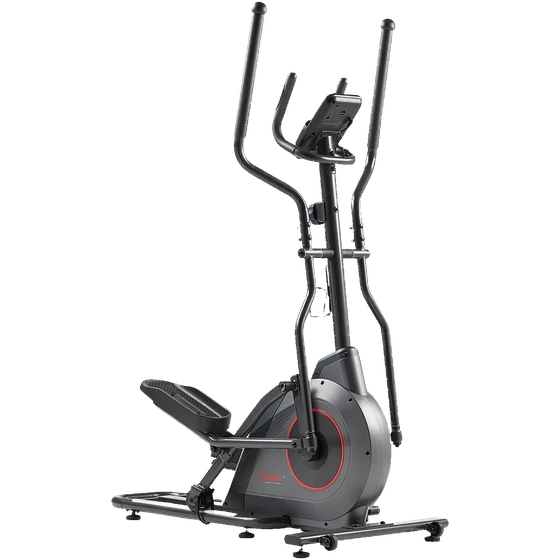 Sunny Health & Fitness Pro SF-E323038 Sunny Health & Fitness Pro SF-E323038
|
Sunny Health & Fitness | magnetic | $499.99 |
Regular Use: Weight Loss and Toning
For 3 to 4 sessions per week of 30 to 45 minutes, a mid-range model with a 20 to 30 lb flywheel and motorized magnetic resistance will be more comfortable: more precise adjustments and automatic programs.
Recommended Elliptical Models for Regular Use
| Model | Brand | Resistance | Price |
|---|---|---|---|
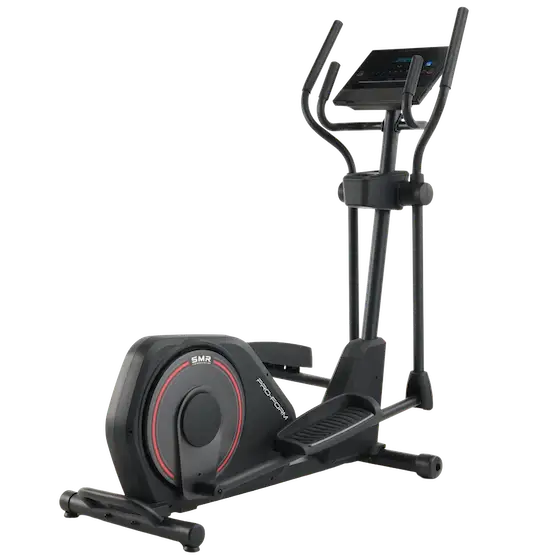 ProForm Sport Elliptical ProForm Sport Elliptical
|
ProForm | magnetic | $799.99 |
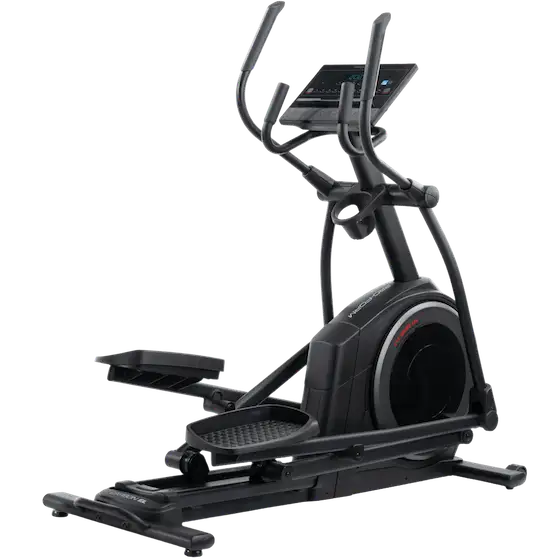 ProForm Carbon EL ProForm Carbon EL
|
ProForm | magnetic | $799.99 |
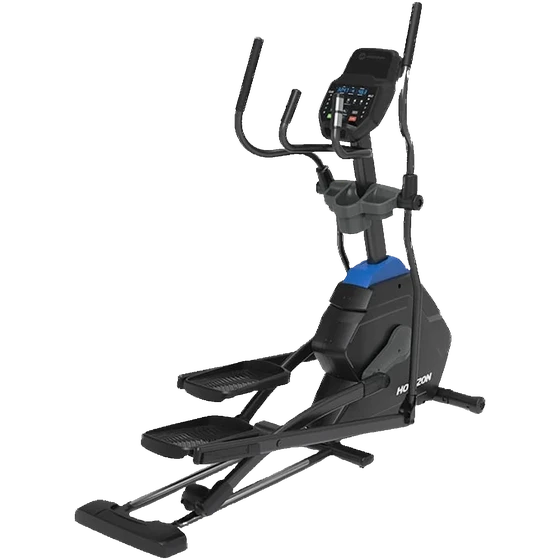 Horizon EX-59 Horizon EX-59
|
Horizon | magnetic | $799.00 |
Intensive Use: Performance and Endurance
For daily use or intense sessions, a high-end model with a 25 to 35 lb flywheel and electromagnetic resistance is recommended—especially if you plan to use structured workouts (intervals, hill programs) and progress over time.
Recommended Elliptical Models for Intensive Use
| Model | Brand | Resistance | Price |
|---|---|---|---|
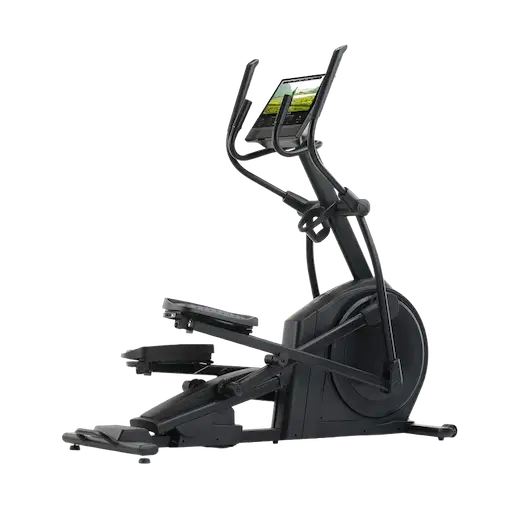 NordicTrack AirGlide 16 Elliptical NordicTrack AirGlide 16 Elliptical
|
NordicTrack | magnetic | $2,499.99 |
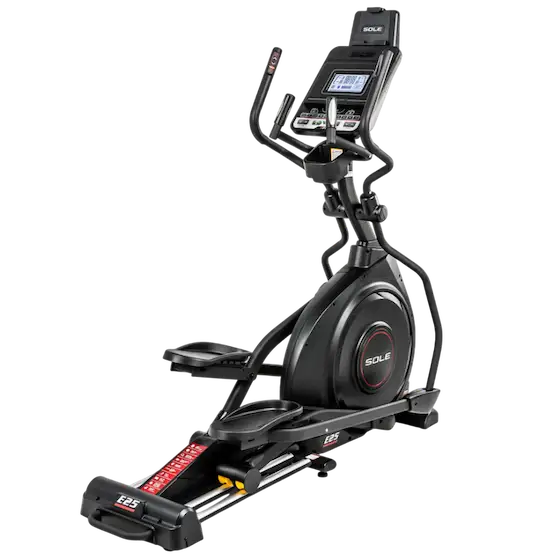 Sole E25 Sole E25
|
Sole | magnetic | $1,299.99 |
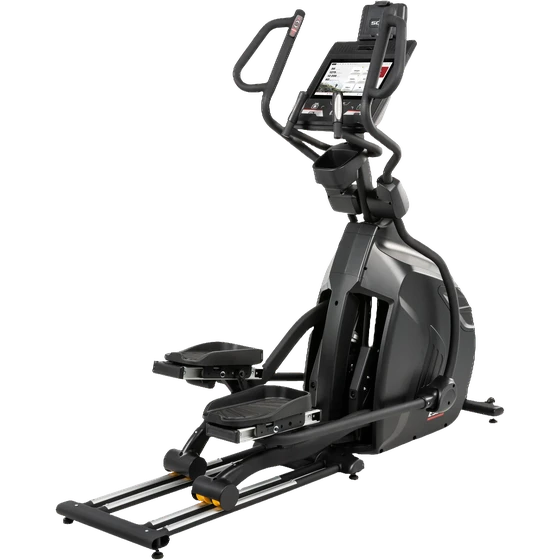 Sole E95S Sole E95S
|
Sole | magnetic | $2,699.99 |
Professional or Near-Pro Use
For a demanding home gym or very frequent shared use, high-end or professional models offer reinforced construction, high-precision electromagnetic resistance, and generally better-structured customer support. These machines are built to last years under intensive use and come with numerous training options. The downside: these models require a significant investment, with prices in the thousands of dollars.
Recommended Elliptical Models for Professional Use
| Model | Brand | Resistance | Price |
|---|---|---|---|
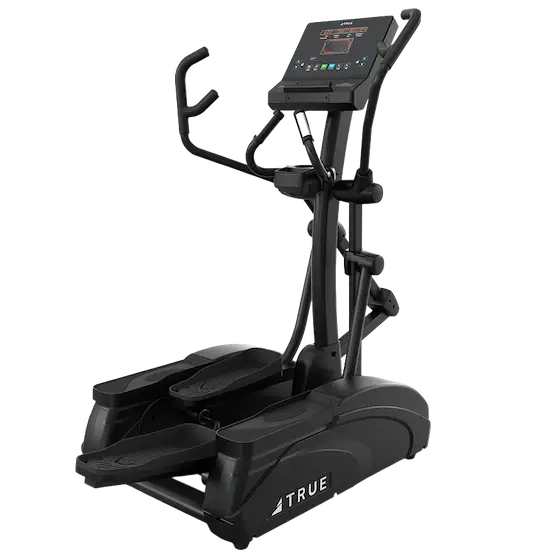 TRUE Fitness M50 TRUE Fitness M50
|
TRUE Fitness | electromagnetic | $3,599.00 |
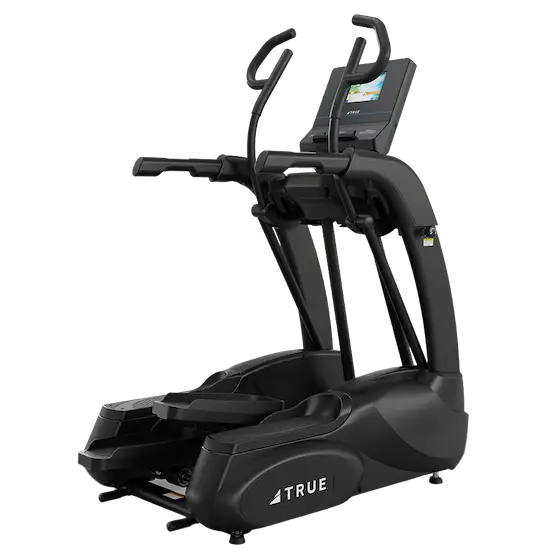 TRUE Fitness Performance Series TRUE Fitness Performance Series
|
TRUE Fitness | electromagnetic | $6,099.00 |
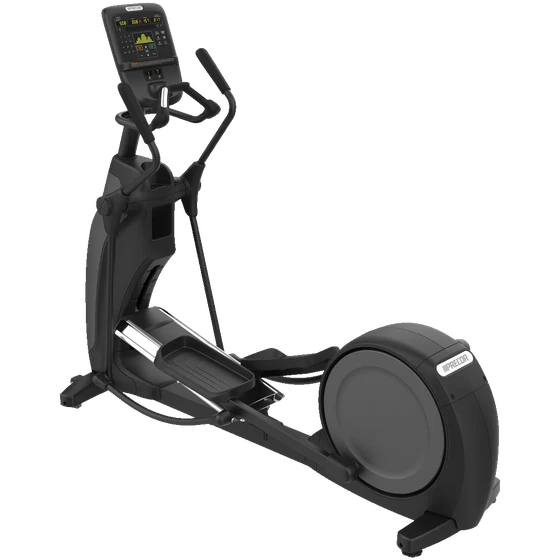 Precor EFX 635 Precor EFX 635
|
Precor | electromagnetic | $11,500.00 |
Mistakes to Avoid Before Buying
Quick points on the main mistakes buyers make when purchasing an elliptical.
- Focusing and buying solely on price: An uncomfortable or unstable elliptical will inevitably end up unused.
- Relying on flywheel weight alone: Smoothness also depends on resistance type, design, and frame rigidity.
- Forgetting to measure your space: Length, width, and clearance around the machine.
- Neglecting ceiling height: On an elliptical, check vertical clearance before buying (see the simple rule below).
- Underestimating stability: A machine that's too light may vibrate or wobble (especially the moving arms), making workouts unpleasant and accelerating wear.
- Overlooking stride length: This is one of the most important comfort criteria, especially if you're tall.
The Flywheel: The Heart of the Elliptical
The flywheel is often presented as the key factor for pedaling comfort. This is partly true: it significantly influences inertia, movement consistency, and the feeling of "smoothness." But it's also one of the most oversold features—you shouldn't bet everything on just a heavy flywheel. The actual feel often depends more on geometry (trajectory), resistance, and frame rigidity than on a single number. In practice, flywheel weight is a useful reference point… but ultimately secondary.
What Weight Should You Aim For?
For a quality home elliptical, aim for at least 20 lb: this is the generally recommended threshold for smooth, consistent pedaling. Below 15 lb, the motion can feel jerky or "cheap." Premium models often go up to 25–30 lb, offering an even smoother feel. Most home ellipticals advertise a flywheel between 12 and 30 lb.
However, keep in mind: resistance type is equally important. A lighter flywheel paired with well-calibrated electromagnetic resistance can feel smoother than a very heavy flywheel on a poorly designed machine. Look at the whole picture: resistance, stability, rail quality, rigidity (frame/arms), and adjustment precision.
Flywheel Position: Front, Rear, or Center
Flywheel position affects footprint and mechanical design. But it's not enough to predict pedaling feel. The actual sensation (closer to a stepper, running, or cross-country skiing) mainly depends on pedal trajectory, stride length, and ramp incline. For more on this topic, check out our dedicated article on elliptical flywheel position.
Rear-Drive
Rear-mounted flywheels are common on entry-level models but also on some premium machines. The advantage: a generally "flatter" trajectory that's closer to a natural running stride. This configuration is often recommended for people with chronic joint issues (knees, hips) because it reduces the "climbing" sensation typical of front-drive machines. On well-designed models, the motion can be very smooth—geometry remains the determining factor.
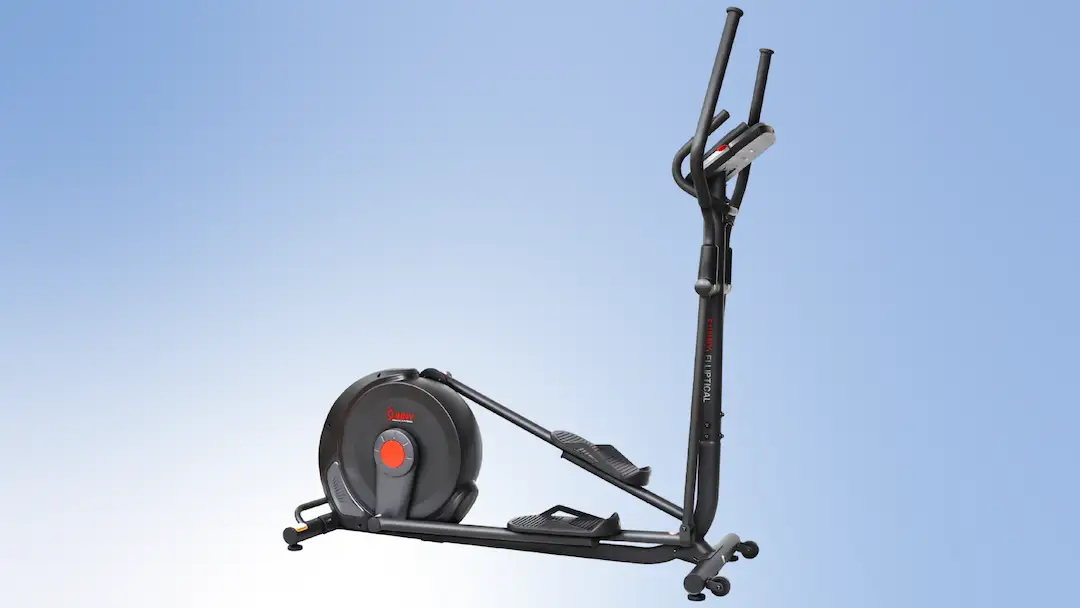
Note: A rear-drive isn't automatically a dealbreaker if you're looking for a high-end model. Brands like Precor, Life Fitness, and Technogym use this configuration on some of their top-tier models.
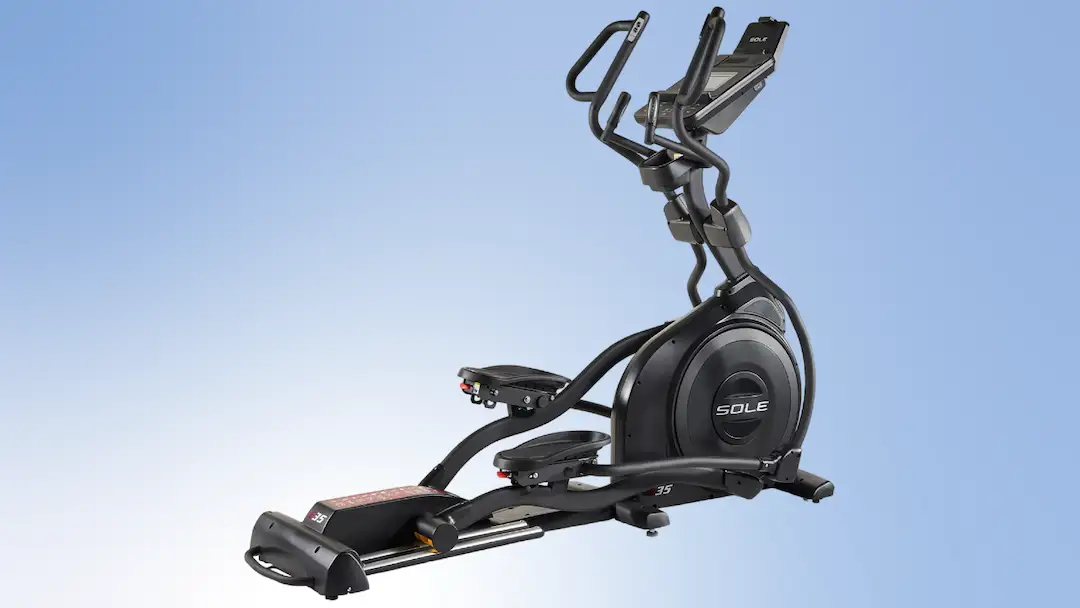
Front-Drive
This configuration is common in mid-range, high-end, and some performance-oriented machines. Front-drive tends to create an "uphill" sensation, making it a good choice for targeting glutes and quads—especially with an adjustable incline ramp. But this isn't an absolute rule: depending on design choices, a front-drive can also offer an elongated stride similar to cross-country skiing.
Center-Drive
Less common and generally reserved for high-end machines, this configuration places you at the center of the machine. It often provides a more balanced position and very natural biomechanics. Center-drive ellipticals are typically more compact (more square-shaped) than front/rear-drive models, making them an interesting choice for tight spaces. Another advantage: often quieter and smoother operation. Center-drive models, like the popular TRUE Fitness M50, are fairly rare and their prices rarely drop below $2,500.
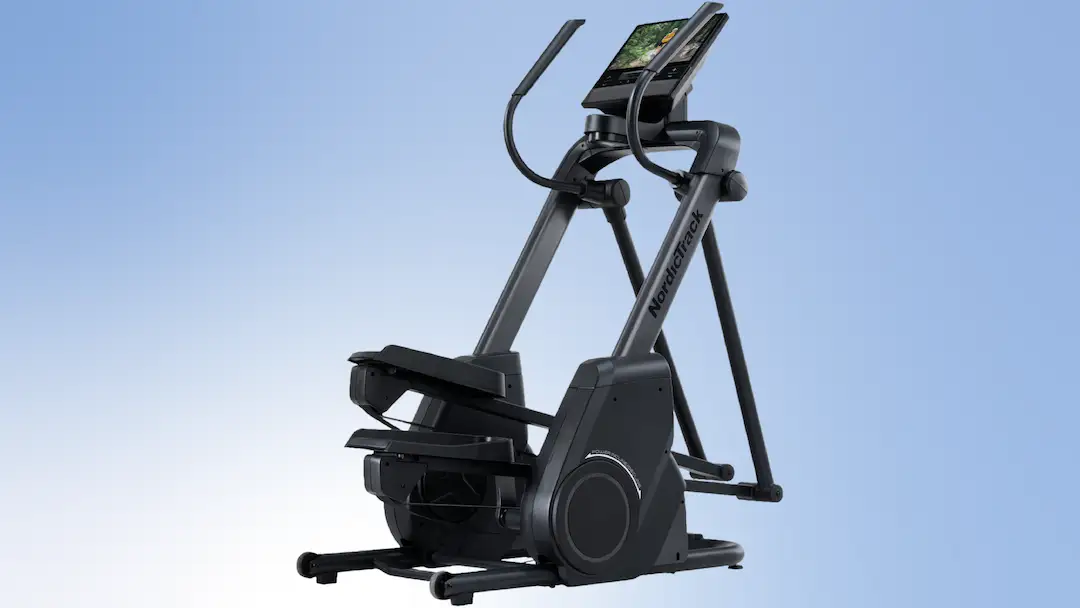
Concrete example: two machines can have different drive positions yet produce opposite sensations. A rear-drive machine with a long stride (e.g., 20 in) and a relatively "flat" trajectory can feel like cross-country skiing, while a front-drive machine with a shorter stride and more vertical trajectory can feel more like climbing.
Resistance Type
The resistance system determines how effort increases or decreases during your workout. It's essentially the braking system for the flywheel. Mechanical (friction pad) resistance systems are now absent from virtually all new models. The two resistance types found on current ellipticals are magnetic and electromagnetic resistance.
Magnetic Resistance
Permanent magnets create braking force without physical contact with the flywheel. With no direct contact, the system wears very little and requires minimal maintenance. There are two variants.
Manual Magnetic
Adjustment via a dial or lever. Simple, reliable, no power outlet needed. However: no automatic programs, less precise adjustment, and resistance changes are less convenient during exercise. Hill programs are rarely available on this type of model.
Motorized Magnetic
The magnets are moved by a small motor controlled by the console. This enables automatic programs and more precise adjustment. Generally requires an electrical connection. This system is very common on mid-range models.
Electromagnetic Resistance
An electronically controlled electromagnet generates the braking force. Resistance is automatically adjusted by the console or an app, without mechanically moving the magnets. This technology equips many connected and high-end models: finer adjustment, smoother transitions, and often quieter operation.
Advantages: Very precise adjustment (sometimes in watts),
automatic programs, smooth transitions, optimal silence, high durability.
Limitations: Higher price, requires electrical power.
Stride Length Based on Your Height
Stride length is one of the most important comfort criteria. This is especially true if you're tall: a stride that's too short creates a cramped, "circular" feeling.
| Your Height | Recommended Stride Length | Minimum Machine Length |
|---|---|---|
| Under 5'0" | 11–14 in | ~45 in |
| 5'0" to 5'3" | 14–16 in | ~47 in |
| 5'4" to 5'8" | 16–20 in | ~51 in |
| 5'9" to 6'0" | 18–20 in | ~59 in |
| Over 6'0" | 20–22 in | ~67 in+ |
Important point: if the machine will be used by multiple family members, it may be wise to choose an adjustable stride model—as long as it remains stable and comfortable at all positions.
Dimensions, Footprint, and Ceiling Height
An elliptical is bulky. Measure your available space before buying, and plan for safety clearance around and above.
Recommended Space
Plan for some air around the machine (on the sides and behind) to mount and dismount and move freely. Ideally, allow about 20 in of clearance when possible.
Ceiling Height
Use a simple, actionable rule: take the tallest user's height and add 20 in. If your ceiling is above this total, you're generally in a comfortable zone (accounting for movement and a small safety margin).
Foldable Models
Foldable ellipticals are practical for small spaces but often less stable and with shorter stride lengths. If you work out regularly, avoid overly basic foldable models: aim for at least a mid-range quality level.
Console, Programs, and Connectivity
Essential Data
The console should display: duration, distance, speed, estimated calories, and ideally heart rate. A readable screen (backlit) improves comfort.
Built-In Programs
Intervals, hill, endurance, weight loss: these programs automatically adjust resistance and make workouts more effective and less monotonous.
Connectivity (Apps, Coaching, Subscriptions)
Some models connect to apps (such as iFIT or Kinomap, depending on compatibility) or offer on-demand classes. Note: these features often come with a monthly subscription. Before buying, check what remains accessible without a subscription and estimate the total cost over several years.
Regarding Zwift: unlike bikes or treadmills, most ellipticals aren't natively compatible. Integration depends on the machine's sensors (ANT+, Bluetooth) and may require third-party solutions (external sensors, adapters). Verify specific model compatibility before buying if Zwift is important to you.
Usage Comfort
Pedals
Look for wide, non-slip pedals and a narrow distance between pedals (Q-factor). A Q-factor that's too wide can create hip tension, especially during long sessions.
Useful reference: on good comfort-oriented ellipticals, you'll often find "narrow" Q-factor values in a range of about 2 to 6 in. If you're sensitive in the hips/knees, go for the narrowest possible and trust your feel: your knees should "go up and down" in alignment, not flare outward. Simple test: pedal for 10 minutes; if discomfort appears in your hips or your knees "flare" outward, the Q-factor is probably too wide for you.
Incline Ramp: Useful or Gimmick?
An adjustable ramp can noticeably change the feel and muscles targeted. Generally, higher incline makes the effort feel more like climbing (emphasis on the front of the thighs and glutes), while lower incline allows a more "gliding," elongated motion similar to cross-country skiing.
Who it's useful for: Regular users looking to vary workouts,
target different muscle groups, or progress over time.
Who can skip it: Beginners, occasional users, or those whose
goal is simply regular cardio without variety.
Handlebars
Ideally: fixed handlebars (often with heart rate sensors) plus moving arms. Check the grip ergonomics.
Stability and Machine Weight
Stability is essential. As a rule, a heavier machine is more stable. For serious use, many good models weigh between 110 and 200 lb (or more). Also check for adjustable leveling feet.
Max User Weight and Durability
"Max user weight" indicates the supported load. For safety and durability, always choose a machine with a capacity that comfortably exceeds your weight—the larger the margin, the better for the machine's longevity.
| Price (USD) | Typical Max User Weight |
|---|---|
| $200–$800 | 250–300 lb |
| $800–$1,500 | 300–350 lb |
| $1,500–$3,000 | 350–400 lb |
| $3,000+ | 350–450 lb (often) |
Warranty, Customer Support, and Parts (US Logic)
The warranty is a quality signal. In the American "consumer" mindset, look separately at:
- Frame: Ideally "lifetime" or very long-term
- Parts: 3–5 years is a good level
- Labor: 1–2 years is common
Also check parts availability, support reputation, and delivery times.
Delivery, Assembly, Returns, and Parts Availability
In the US market, this can make the difference between a good deal and a bad purchase—especially on heavy machines:
- Delivery: Check if delivery is "doorstep" or "room of choice," and if "white glove" service (assembly + packaging removal) is available.
- Assembly: Check the time and complexity (some machines are painful to assemble alone). Professional assembly is often worthwhile on heavy models.
- Returns: Check the timeframe, fees (shipping/freight), and conditions (some policies are strict if the machine is assembled or used).
- Parts: Favor brands that clearly list parts, references, and lead times—especially for consoles and sensors.
Standards, Safety, and Certifications (US Mindset)
For a purchase aligned with American standards (especially if the machine is connected or motorized), check for certifications and compliance mentions.
- UL or ETL: Electrical compliance (safety)
- FCC: Radio equipment compliance (Bluetooth / Wi-Fi)
- ASTM (where applicable): Testing / safety / performance standards
These don't guarantee "the best elliptical," but they significantly reduce the risk of unpleasant surprises and build confidence in the manufacturer.
What Budget for an Elliptical?
Entry-Level: $200–$800
For occasional use. Simple console, basic resistance, often shorter stride length. Suitable for beginners, but durability and smoothness are sometimes limited: this is the range where you need to be most vigilant about stability and stride comfort.
| Model | Brand | Resistance | Price |
|---|---|---|---|
|
Sunny Health & Fitness SF-E905SMART
|
Sunny Health & Fitness | magnetic | $299.99 |
|
Sunny Health & Fitness Corezy SF-E324005
|
Sunny Health & Fitness | magnetic | $319.99 |
|
ProForm Sport Elliptical
|
ProForm | magnetic | $799.99 |
Mid-Range: $800–$1,500
Often the best compromise for regular use: better stability, programs, motorized resistance, more comfortable experience. This is often the "sweet spot" for most users.
| Model | Brand | Resistance | Price |
|---|---|---|---|
|
Sole E25
|
Sole | magnetic | $1,299.99 |
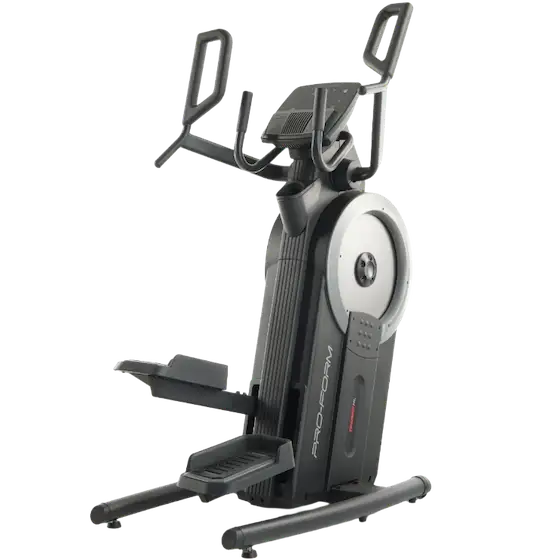 ProForm Trainer HL HIIT ProForm Trainer HL HIIT
|
ProForm | magnetic | $1,299.99 |
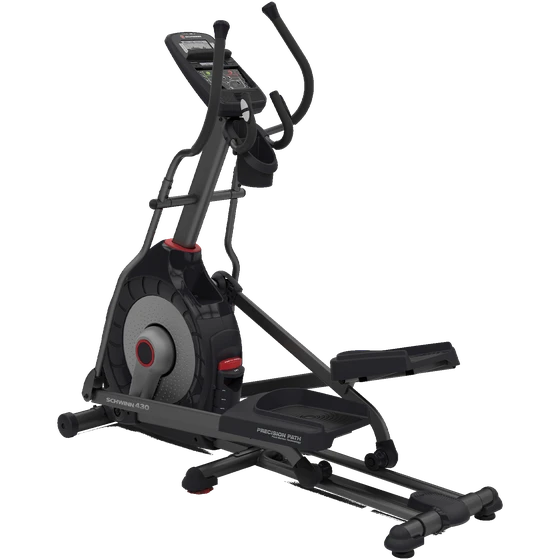 Schwinn 430 Schwinn 430
|
Schwinn | magnetic | $999.00 |
High-End: $1,500–$3,000
For intensive use: better ergonomics, quieter operation, more precise resistance (often electromagnetic), advanced connectivity, sometimes adjustable incline and/or stride. Ideal if you plan to work out frequently and long-term.
| Model | Brand | Resistance | Price |
|---|---|---|---|
|
NordicTrack AirGlide 16 Elliptical
|
NordicTrack | magnetic | $2,499.99 |
|
Sole E95S
|
Sole | magnetic | $2,699.99 |
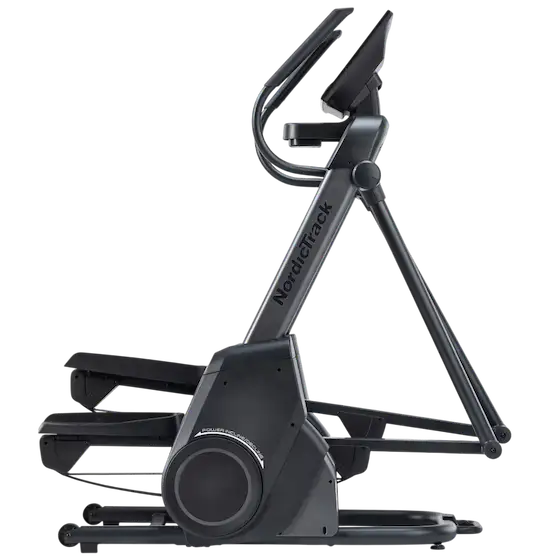 NordicTrack X16 NordicTrack X16
|
NordicTrack | magnetic | $2,499.99 |
Pro / Commercial: $3,000+
Machines designed for daily intensive use. Very robust construction (reinforced frame, high stability), electromagnetic resistance with fine control, advanced consoles, and generally better-structured customer support. Worthwhile for demanding home gyms or very intensive use over several years.
| Model | Brand | Resistance | Price |
|---|---|---|---|
|
TRUE Fitness M50
|
TRUE Fitness | electromagnetic | $3,599.00 |
|
TRUE Fitness Performance Series
|
TRUE Fitness | electromagnetic | $6,099.00 |
|
Precor EFX 635
|
Precor | electromagnetic | $11,500.00 |
The "True Cost" Over 5 Years: Don't Overlook It
An elliptical can cost far more than its purchase price once you add up the extras. Before deciding, estimate:
- Subscription (if iFIT / premium content): often $15–$40/month
- Floor mat: ~$30–$60
- Maintenance (cleaning, tightening, sometimes lubrication): low but real
- Delivery / assembly: Sometimes charged depending on the seller
- Electricity: The electricity cost of an elliptical is minimal (a few dollars per year), or even zero if you opt for a self-powered model
When Is an Elliptical Not the Best Choice?
A complete guide should also clarify when you're better off choosing a different machine:
- If you want to replicate running "like outdoors," a treadmill will be more appropriate.
- If you're looking for a very vertical sensation (stairs), a stepper/stair climber will be a better fit.
- If space is very limited, a compact exercise bike may be easier to integrate into daily life.
Conclusion: How to Make the Right Choice?
- Define your usage frequency: It's the best "filter" for choosing your price range.
- Look at overall smoothness: Flywheel + resistance + design (rails, rigidity, trajectory).
- Choose the right stride length: The #1 comfort criterion.
- Measure your space: Length, clearance, ceiling height.
- Check max user weight + warranty: Durability and safety.
- Verify certifications & customer support: "Consumer protection" mindset.
A well-chosen elliptical is a lasting investment in your health. Take the time to compare and, if possible, test the motion before buying.
FAQ
What flywheel weight for a beginner?
For a quality home elliptical, aim for at least 20 lb. Below 15 lb, the motion can feel jerky. But keep this in mind: flywheel weight alone doesn't guarantee comfort. If you plan regular use, move up in price range to gain stability, rigidity, and resistance quality—these factors often matter more than a few extra pounds of flywheel.
What stride length if I'm 6'2"?
At 6'2", prioritize a stride length of around 20 to 22 in. Below that, many people feel the stride is too short and more "circular." If you're torn between two models, choose the one that gives you a natural range of motion without pulling on your hips.
Q-factor: What number should I aim for if I have hip pain?
If you have hip sensitivity, go for a "narrow" Q-factor. As a reference, many comfort-oriented machines fall in a range of about 2 to 6 in. What matters most is how it feels: your knees should stay aligned, and you shouldn't feel "spread apart" like you're on a horse. If possible, test for 10 minutes: discomfort often appears over time.
Incline: Useful or gimmick?
If you work out often, incline is rarely a gimmick: it adds variety, changes the feel (more "climbing"), and can emphasize certain muscle groups. If your goal is simple, regular cardio, it's not essential. But for progression, variety, and avoiding monotony, it's a real plus.
Front-drive or rear-drive: Which should you choose?
Position (front/rear/center) alone isn't enough to predict the feel. What matters most is geometry: pedal trajectory, stride length, and incline. In the entry-level range, rear-drive is very common and can result in a shorter stride, but a good rear-drive model can also be excellent. Always test for comfort, especially around the hips and knees.
Can you skip the handlebar heart rate sensors?
Yes. Handlebar sensors often give approximate readings and are sensitive to hand placement. If heart rate tracking matters to you, a chest strap (or a console-compatible sensor) is generally more reliable. Handlebar sensors remain useful as a quick reference, but not as your "gold standard" measurement.
Is a foldable elliptical worth it?
Yes if you're short on space, but check stability and stride length. If you have the room, a fixed model is generally more comfortable and durable.
Do you need a mat under the elliptical?
It's not mandatory, but highly recommended: floor protection, noise reduction, vibration absorption, and better stability. Generally, budget $30 to $60.
Magnetic or electromagnetic?
Magnetic = simple, reliable, often cheaper. Electromagnetic = more precise adjustment, smoother transitions, often quieter, but more expensive. For intensive use, electromagnetic is often an excellent choice.